Ever typed a sentence and paused Is it cat or cats? Person or people You’re not alone. Understanding plural meaning is one of the most fundamental and surprisingly tricky parts of English.
In everyday chats, school assignments, or even professional emails, using the correct plural form can make the difference between sounding fluent and slightly off.
And with global communication booming in 2026, clarity matters more than ever.
This guide breaks down everything you need to know about plural meaning, from simple definitions to tricky irregular forms, real-life examples, and common mistakes people still make.
Whether you’re a student, a non-native speaker, or just brushing up your grammar, you’ll walk away confident in using plurals correctly.
What Does “Plural Meaning” Mean?
‘Plural’ meaning refers to the grammatical form used to indicate more than one of something.
Quick Answer:
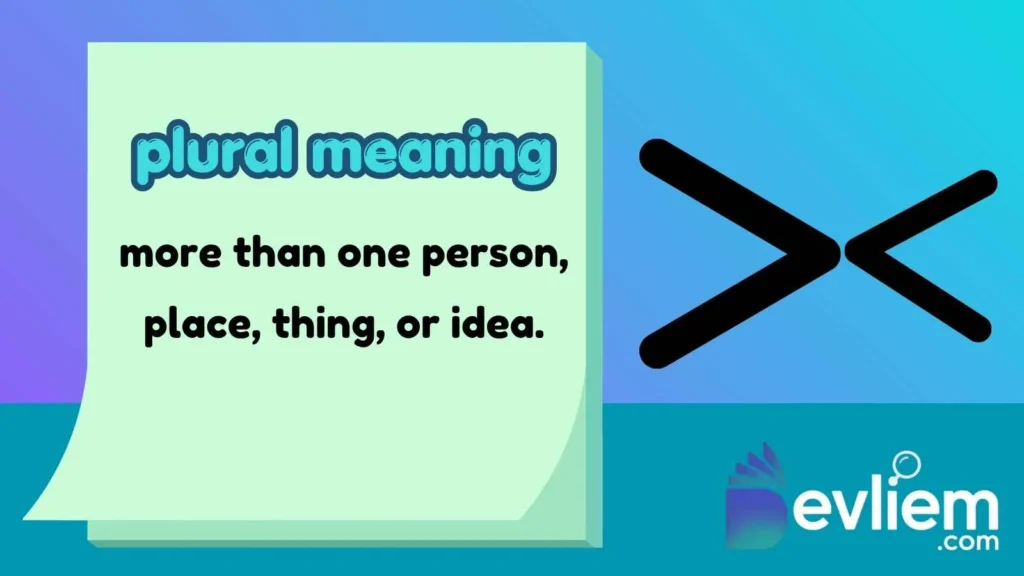
Plural meaning = more than one person, place, thing, or idea.
Simple Definition:
If ‘singular’ means one, ‘plural’ means two or more.
- Singular: book
- Plural: books
Origin of the Concept
The idea of plural forms comes from ancient languages like Latin and Greek, where word endings changed to show quantity. English inherited and simplified many of these rules over time.
How It Evolved
Old English had more complex plural endings. Modern English mostly uses the following:
- -s (cats, cars)
- -es (boxes, buses)
But irregular forms (like children or mice) still reflect older linguistic patterns.
Pronunciation Tip
Plural endings can sound different:
- /s/ → cats
- /z/ → dogs
- /ɪz/ → buses
How to Use “Plural Meaning” Correctly in Texts & Chat
Using plural forms correctly isn’t just grammar—it’s communication clarity.
When to Use Plurals
Use the plural when:
- You’re talking about more than one item
- The exact number is unknown but clearly more than one
Example:
- “I have three books.”
- “There are many options.”
When NOT to Use Plurals
Avoid plurals when:
- Referring to a single item
- Using uncountable nouns (like ‘water’ and ‘information’)
Incorrect:
- “Information” ❌
Correct: - “Information” ✔️
Platform-Specific Usage
- WhatsApp / SMS: Casual, often shortened
→ “Got the files?” - Instagram captions: Clean, expressive
→ “Weekend vibes with friends” - Discord / Gaming: Fast-paced, informal
→ “Enemies incoming!” - Work emails: Formal and precise
→ “Please review the attached documents.”
Formatting Tips
- Don’t overuse apostrophes (no “apple’s” for plural)
- Use commas clearly when listing plural items
- Emojis can reinforce meaning:
→ “Got snacks 🍕🍔🍟”
Real Conversation Examples Using Plural Meaning
1. Between Friends
A: “Did you bring snacks?”
B: “Yeah, I got chips and cookies.”
👉 Plurals show variety and abundance.
2. In a Group Chat
User1: “Guys, the exams are next week!”
User2: “Wait, there are multiple exams?!”
👉 Plural emphasises more than one event.
3. Dating Scenario
A: “I’ve been to a few cafes around here.”
B: “Any favourites?”
👉 Plurals suggest experience and options.
4. Family Conversation
Mom: “Where are your shoes?”
Kid: “I left them outside.”
👉 ‘Plural’ implies a pair or multiple items.
5. Gaming Chat
Player 1: “Enemies approaching from the north!”
Player2: “We need defences now!”
👉 Plural increases urgency and scale.
Common Mistakes & Misunderstandings
1. Adding Apostrophes Incorrectly
Wrong: apple’s
Right: apples
👉 Apostrophes show possession, not plural.
2. Confusing Irregular Plurals
- Child → Children
- Mouse → Mice
Not “childs” or “mouses.”
3. Overgeneralizing Rules
Some words don’t change:
- Sheep → Sheep
- Fish → Fish (sometimes fishes)
Generational Confusion
Older generations may stick to strict grammar rules, while younger users sometimes bend them casually in texting.
Cultural Differences
Non-native speakers often apply rules from their own language, leading to mistakes like:
- “Peoples” instead of “people”
“Plural Meaning” Across Different Platforms & Demographics
Gen Z Usage
- Fast, informal, sometimes grammatically flexible
- Example: “so many vibes today”
Millennials
- Balanced between correct grammar and casual tone
Professionals
- Strict adherence to correct plural usage
Platform Trends
- TikTok: Short captions, plural for emphasis
- Instagram: Aesthetic phrasing (“good times”)
- Discord: Functional, fast communication
Formal vs Informal
- Plurals are universal, but correctness matters more in formal contexts
- Safe for work? ✔️ Always—just use correctly
Related Slang, Abbreviations & Alternatives
Here are related grammar and language terms:
- Singular – One item
- Collective nouns – Group treated as one (team, family)
- Countable nouns – Can be pluralized (books)
- Uncountable nouns – Cannot (water)
- Irregular plurals – Non-standard forms (men, women)
- Mass nouns – Similar to uncountable nouns
- Quantifiers – Words like many, few, several
- Determiners – Words like these, those
FAQs:
What is plural meaning in simple terms?
Plural meaning refers to words used to show more than one of something. Instead of a single item, it represents multiple people, objects, or ideas, like “dogs” instead of “dog.”
How do you form plural nouns in English?
Most plurals are formed by adding “-s” or “-es” to a word. However, irregular forms exist, such as “man” becoming “men” or “child” becoming “children.”
What is the difference between singular and plural?
Singular refers to one item, while plural refers to more than one. For example, “car” is singular, while “cars” is plural.
Are all plural forms regular in English?
No, many plural forms are irregular and must be memorized. Examples include “mouse” to “mice” and “tooth” to “teeth.”
Why is understanding plural meaning important?
It ensures clear communication, prevents misunderstandings, and improves both writing and speaking accuracy in everyday and professional situations.
Conclusion:
Understanding plural meaning isn’t just about grammar rules; it’s about communicating clearly and confidently.
From simple add-an-s cases to tricky irregular forms, plurals shape how we describe the world around us. And once you master them, your writing instantly feels sharper.
The next time you text, write, or speak, you’ll notice plurals everywhere and use them like a pro.
Want to go deeper? Explore more grammar basics, or better yet start spotting plural patterns in your daily conversations.
Now your turn: What’s the weirdest plural word you’ve seen? Drop it below!

Hi, I’m Emily Taylor, the voice behind Devliem.com, where meanings aren’t just explained, they’re made easy to understand.
I’ve always been fascinated by words, the way they change, evolve, and sometimes confuse us more than they should. That curiosity turned into a mission: to break down complex meanings, trending slang, and everyday expressions into something clear, simple, and actually useful.