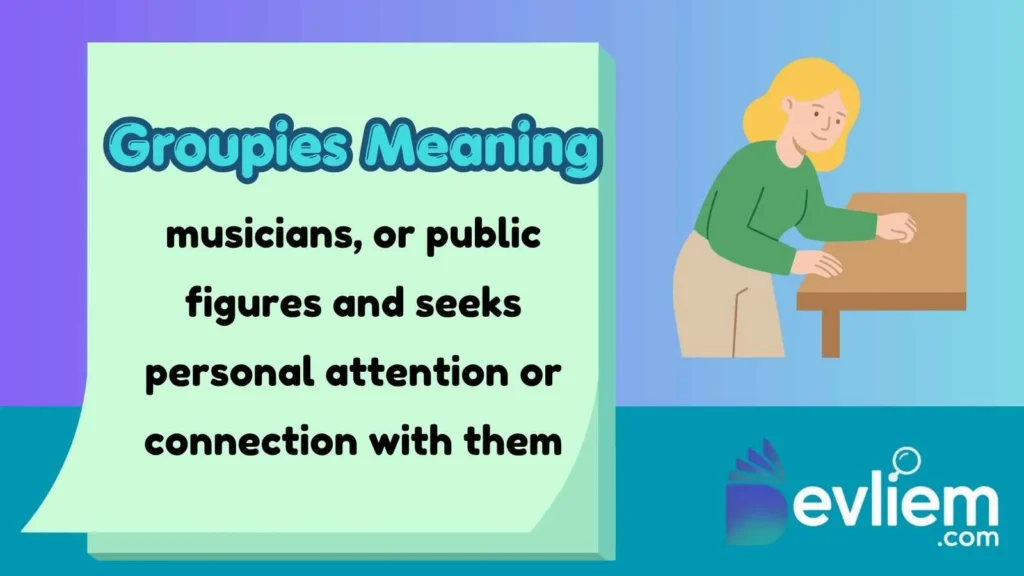
The term groupies refers to people who strongly admire and closely follow musicians, bands, celebrities, athletes, influencers, or other public figures, often seeking personal attention, backstage access, or social connections with them.
In simple terms, a groupie is more than just a regular fan.
While fans support someone’s work, groupies are often associated with wanting a personal relationship or close interaction with the person they admire.
Quick Definition
| Term | Meaning |
|---|---|
| Groupie | A person who enthusiastically follows celebrities, musicians, or public figures and seeks personal attention or connection with them. |
Depending on the context, the word can be neutral, playful, or slightly negative.
Is “Groupies” a Full Form?
No.
Groupies is not an acronym or abbreviation. It is a regular English word derived from the noun groupie, with groupies being the plural form.
- Singular: Groupie
- Plural: Groupies
Many people mistakenly search for the “full form” of groupies, but there isn’t one.
Where Did the Term Groupie Come From?
The word became popular during the rock-and-roll era of the 1960s and 1970s.
At the time, certain fans traveled from concert to concert following famous bands. These followers often became known as groupies because they spent significant time around music groups and performers.
The term became especially associated with legendary rock bands and the backstage culture that surrounded the music industry.
Over time, the meaning expanded beyond music and can now apply to:
- Movie stars
- Athletes
- Influencers
- Social media personalities
- Online creators
- Reality TV celebrities
Today, you might hear someone called a groupie even if they’ve never attended a concert.
What Does Groupies Mean in Texting?
In texting, groupies usually refers to people who constantly chase attention from a celebrity, influencer, athlete, or popular person.
The term is often used jokingly among friends.
Example Text Messages
Friend 1: Did you see all those people waiting outside the hotel?
Friend 2: Yeah, the singer’s groupies showed up hours early.
Text Example:
“Ever since he got famous online, he has a bunch of groupies in his comments.”
In texting, the word is rarely used literally. Most people use it casually to describe overly devoted followers.
Groupies Meaning on Snapchat
On Snapchat, groupies often refers to followers who consistently engage with a creator, influencer, or popular user.
Someone might jokingly say:
“His Snapchat groupies watch every story within seconds.”
The term can describe:
- Loyal followers
- Admirers
- Attention-seekers around popular users
- People constantly responding to stories
Because Snapchat revolves around personal interaction, the word sometimes carries a playful tone.
Groupies Meaning on TikTok
TikTok has given the word a newer, internet-focused meaning.
On TikTok, people may call someone a groupie when they:
- Constantly comment on a creator’s videos
- Defend influencers online
- Follow internet personalities obsessively
- Seek attention from creators
TikTok Example
“The comments are full of groupies defending him again.”
In this context, the word can be mildly critical, suggesting excessive admiration.
However, many users also use it humorously without serious judgment.
Groupies Meaning on Instagram
Instagram users often use the term to describe people who:
- Comment on every post
- Try to get noticed by influencers
- Constantly interact with celebrities
- Attend creator meetups repeatedly
Example:
“She acts like one of his Instagram groupies.”
Here, the speaker may be teasing someone for being overly invested in a public figure’s life.
The Difference Between a Fan and a Groupie
Many people confuse these terms.
While they seem similar, there’s an important distinction.
| Fan | Groupie |
|---|---|
| Supports someone’s work | Often seeks personal access or attention |
| Enjoys content, music, or performances | Focuses more on personal connection |
| Usually follows from a distance | May actively pursue interaction |
| Generally neutral term | Can be positive, playful, or negative |
A person can be a fan without being a groupie.
Not every dedicated supporter falls into the groupie category.
How People Commonly Use the Word
The meaning changes based on the situation.
1. Music Culture
“The band’s groupies traveled across several states to attend every show.”
2. Sports
“The star athlete had groupies waiting after the game.”
3. Social Media
“Every influencer seems to have a group of loyal groupies.”
4. Friend-to-Friend Teasing
“You liked every photo she posted. You’re turning into a groupie.”
This playful use is increasingly common online.
Real Conversation Examples
Example 1
Alex: Why are they standing outside the arena?
Jordan: They’re probably groupies waiting for the band.
Example 2
Emma: You watched all twenty of his livestreams?
Mia: Don’t call me a groupie.
Example 3
Ryan: His followers defend everything he does.
Chris: That’s what groupies do.
The Emotional Tone Behind the Word
One reason the term remains popular is that its tone changes depending on who says it.
Positive Tone
Sometimes it simply means:
- Loyal supporter
- Dedicated follower
- Passionate admirer
Playful Tone
Friends often use it jokingly:
“You’re such a groupie for that influencer.”
Negative Tone
In some situations, it implies:
- Obsession
- Blind admiration
- Excessive attention-seeking
Understanding the speaker’s intent is important.
When You Should Not Use the Term
Although common, the word isn’t always appropriate.
Avoid using it when:
You Want to Show Respect
Calling professional fans or supporters “groupies” may sound dismissive.
In Formal Writing
Business reports, academic work, and professional communication generally avoid the term.
Around Sensitive Topics
The word has historical associations with celebrity culture and personal relationships that some people may find outdated or offensive.
When in doubt, use alternatives such as:
- Fan
- Supporter
- Follower
- Admirer
- Enthusiast
Common Misunderstandings About Groupies
Myth 1: Every Groupie Is Obsessed
Not necessarily.
Many people labeled as groupies are simply enthusiastic supporters.
Myth 2: The Word Only Applies to Musicians
Originally yes, but today it applies to many public figures.
Myth 3: It’s Always an Insult
Not true.
The word can be neutral, humorous, affectionate, or critical depending on context.
Similar Slang Terms and Related Words
If you’re learning internet slang, these related terms are worth knowing.
| Term | Meaning |
|---|---|
| Stan | Extremely devoted fan |
| Superfan | Highly enthusiastic supporter |
| Follower | Someone who follows a creator online |
| Admirer | Person who appreciates someone |
| Fangirl | Female fan expressing excitement |
| Fanboy | Male fan expressing excitement |
| Supporter | General term for someone who backs a person or cause |
These terms are often linked in discussions about celebrity culture and social media communities.
Internal Linking Opportunities
Related meanings articles could include:
- Stan Meaning
- Fangirl Meaning
- Fanboy Meaning
- Simp Meaning
- NPC Meaning
- Delulu Meaning
- Mutuals Meaning
- FYP Meaning
- POV Meaning
Groupies in Modern Internet Culture
The internet has transformed how people use the word.
Decades ago, groupies were usually associated with touring musicians.
Today, someone can be called a groupie simply for:
- Commenting on every TikTok post
- Constantly defending an influencer
- Joining every livestream
- Following a creator across multiple platforms
This shift reflects how celebrity culture has moved online.
The word now appears in discussions involving:
- TikTok creators
- YouTubers
- Streamers
- Instagram influencers
- Online communities
As digital fame grows, so does the use of terms like groupie.
FAQs:
What does groupies mean in slang?
In slang, groupies refers to people who closely follow and admire celebrities, influencers, musicians, or public figures, often seeking personal attention or interaction.
Is being called a groupie an insult?
Not always. It can be playful, neutral, or negative depending on the speaker’s intention and context.
What is the difference between a fan and a groupie?
A fan appreciates someone’s work, while a groupie is often portrayed as seeking a closer personal connection with that person.
Can influencers have groupies?
Yes. Modern internet culture frequently uses the term for followers who are highly devoted to influencers and content creators.
Is groupies a bad word?
No. However, some people may view it negatively if it suggests obsession or excessive admiration.
Does the term only apply to music?
No. Although it originated in music culture, it now applies to celebrities, athletes, influencers, and many other public figures.
Final Thoughts:
The meaning of groupies has evolved significantly over the years.
What began as a term connected to rock bands and concert culture has expanded into a broader label for highly devoted followers of celebrities, athletes, influencers, and online personalities.
Today, the word can be playful, complimentary, or mildly critical depending on how it’s used. In most cases, it describes people who go beyond ordinary fandom and actively seek attention, interaction, or a closer connection with someone they admire.
When you encounter the term on TikTok, Instagram, Snapchat, or in everyday conversations, pay attention to the context. The tone often reveals whether the speaker is praising loyalty, joking with friends, or criticizing excessive devotion.

Hi, I’m Emily Taylor, the voice behind Devliem.com, where meanings aren’t just explained, they’re made easy to understand.
I’ve always been fascinated by words, the way they change, evolve, and sometimes confuse us more than they should. That curiosity turned into a mission: to break down complex meanings, trending slang, and everyday expressions into something clear, simple, and actually useful.