An irrational fear can feel completely real, even when a person knows there’s little or no actual danger present.
Most people have experienced this at some point.
Maybe it’s a fear of flying despite statistics showing air travel is safe. Perhaps it’s an intense fear of harmless insects, public speaking, or even making a simple phone call.
The interesting part is that irrational fears don’t always follow logic.
That’s exactly why they can be frustrating, confusing, and sometimes difficult to overcome.
In this guide, you’ll learn the full meaning of irrational fear, where the term comes from, how people use it online and in everyday conversations, and how it differs from ordinary fears.
Meaning Overview
Irrational fear refers to a fear, anxiety, or sense of dread that is disproportionate to the actual threat or danger involved.
In simple terms:
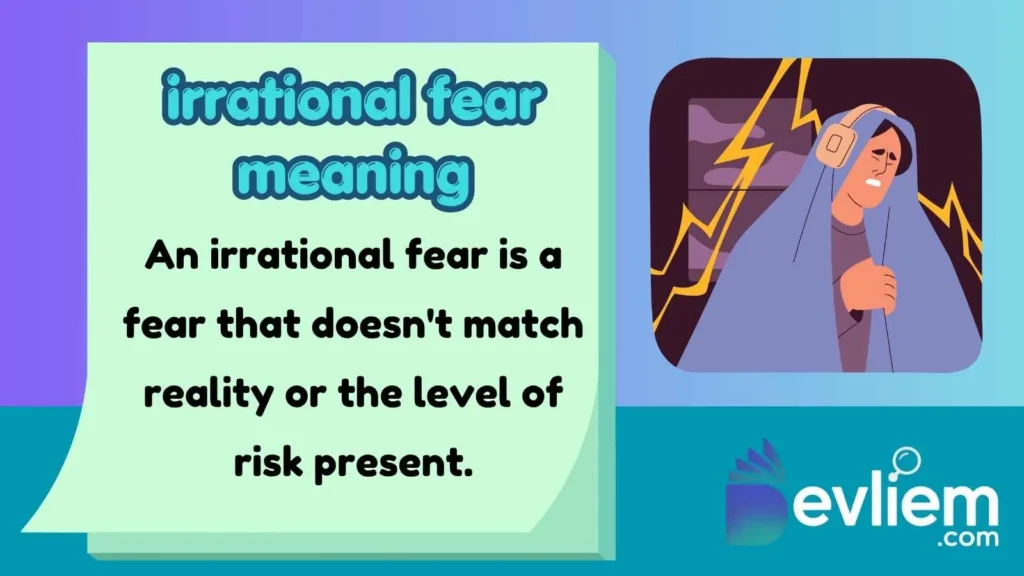
An irrational fear is a fear that doesn’t match reality or the level of risk present.
The person experiencing it may understand that the fear is unreasonable, yet still feel intense anxiety.
Quick Definition
| Term | Meaning |
|---|---|
| Irrational Fear | A strong fear that lacks a logical or realistic basis |
| Related Concept | Phobia, anxiety, excessive worry |
| Common Usage | Psychology, everyday conversations, social media discussions |
Full Form
The phrase irrational fear is not an acronym or abbreviation.
Instead:
- Irrational means not based on reason or logic.
- Fear means an emotional response to perceived danger.
Together, the phrase describes a fear that exists even when there is little or no genuine threat.
Where Did the Term Come From?
The concept of irrational fear has existed for centuries.
Ancient philosophers discussed how emotions sometimes overpower logic. Later, psychologists began studying fears that appeared disconnected from actual danger.
During the late nineteenth and early twentieth centuries, researchers explored conditions now known as phobias. They noticed that people could experience intense fear reactions despite understanding that their fears were unlikely to happen.
Today, the term is commonly used in:
- Psychology
- Mental health discussions
- Self-improvement content
- Social media conversations
- Everyday speech
While not every irrational fear qualifies as a clinical phobia, the two concepts are closely related.
What Makes a Fear Irrational?
Not every fear is irrational.
Fear is actually a useful survival mechanism. It helps humans avoid danger and respond to threats.
A fear becomes irrational when:
- The danger is extremely unlikely
- The emotional response is much stronger than the situation warrants
- The fear interferes with daily life
- Logic does not reduce the anxiety
Example
A fear of walking alone through a dangerous area at night is generally rational.
A fear that a harmless butterfly will seriously injure you is usually considered irrational.
The difference lies in the actual level of risk.
Common Examples of Irrational Fears
Many irrational fears are surprisingly common.
Examples include:
- Fear of spiders despite knowing they’re harmless
- Fear of flying
- Fear of elevators
- Fear of clowns
- Fear of public speaking
- Fear of needles
- Fear of heights
- Fear of making mistakes
- Fear of being judged by strangers
- Fear of certain sounds or objects
Some irrational fears are mild, while others can significantly affect daily activities.
Irrational Fear Meaning in Texting
In texting, people often use “irrational fear” casually rather than as a psychological term.
For example:
Text Message:
Alex: What’s your irrational fear?
Jordan: Honestly? Accidentally sending a screenshot to the person I’m talking about.
Here, the phrase is used humorously to describe a fear that feels real even though it may never happen.
Common Texting Uses
People often use the term to discuss:
- Funny fears
- Embarrassing situations
- Social anxiety
- Everyday worries
- Relatable experiences
Irrational Fear Meaning on Snapchat
On Snapchat, users frequently share “irrational fear” stories through:
- Snaps
- Captions
- Q&A stickers
- Personal stories
Example:
“My irrational fear is waving back at someone who wasn’t actually waving at me.”
This type of post usually invites others to share similar experiences.
Irrational Fear Meaning on TikTok
TikTok has turned irrational fears into a popular content trend.
Creators often post videos titled:
- “Tell me your irrational fear.”
- “Here’s my weirdest irrational fear.”
- “Things I know won’t happen but still worry about.”
Popular examples include:
- Escalators suddenly malfunctioning
- Sharks appearing in swimming pools
- Falling through a floor
- Accidentally replying to an old message
Many of these videos gain traction because viewers recognize similar fears in themselves.
Irrational Fear Meaning on Instagram
On Instagram, the phrase often appears in:
- Reels
- Story polls
- Meme pages
- Mental health content
Users may ask followers:
“What’s an irrational fear you know makes no sense but still have?”
The responses are often humorous, relatable, and highly engaging.
Real Conversation Examples
Example 1
Friend 1: Why won’t you go on the Ferris wheel?
Friend 2: I have an irrational fear that it might stop at the top forever.
Example 2
Sarah: That’s a tiny spider.
Emma: I know, but my irrational fear takes over every time.
Example 3
Mark: What’s your weirdest irrational fear?
Ben: Accidentally liking a photo from 2018 while stalking someone’s profile.
Example 4
Lily: Are you nervous about the presentation?
Ryan: A little. I have an irrational fear of forgetting every word.
How People Commonly Use the Term
People use “irrational fear” in several ways.
Humor
Many people joke about harmless fears.
Example:
“My irrational fear is that everyone can hear my headphones.”
Self-Reflection
Some use it to discuss personal anxieties.
Example:
“I’ve realized my fear of networking events is mostly irrational.”
Mental Health Discussions
The phrase also appears in serious conversations about anxiety and phobias.
Example:
“An irrational fear can still cause real emotional distress.”
The Emotional Tone Behind the Phrase
The tone depends heavily on context.
Lighthearted
Used jokingly among friends.
Example:
“My irrational fear is tripping in front of a crowd.”
Vulnerable
Used when discussing personal struggles.
Example:
“I’ve dealt with an irrational fear of failure for years.”
Reflective
Used when recognizing one’s own thought patterns.
Example:
“I know it’s irrational, but the fear still feels real.”
When You Should NOT Use the Term
Although common, the phrase isn’t always appropriate.
Avoid calling someone’s fear irrational when:
- They are discussing trauma
- The danger is legitimate
- The person feels emotionally vulnerable
- You don’t understand their experience
What appears irrational from the outside may feel very real to the person experiencing it.
Showing empathy is usually more helpful than dismissing their concerns.
Irrational Fear vs Phobia
Many people use these terms interchangeably, but they are not always identical.
| Irrational Fear | Phobia |
|---|---|
| Can be mild | Usually intense |
| May not affect daily life | Often disrupts daily activities |
| Informal description | Clinical psychological condition |
| Common in everyday conversations | Can require treatment |
Every phobia involves irrational fear, but not every irrational fear qualifies as a phobia.
Similar Terms and Related Meanings
You may also encounter these related terms:
- Anxiety
- Worry
- Phobia
- Panic
- Nervousness
- Social anxiety
- Excessive concern
- Intrusive thoughts
- Fear response
These can make useful internal links on a meanings or psychology-focused website.
Common Misunderstandings
“Irrational fears aren’t real.”
False.
The danger may not be real, but the emotional experience certainly is.
“Only anxious people have irrational fears.”
False.
Almost everyone experiences irrational fears occasionally.
“You can simply stop thinking about it.”
Not always.
Emotions don’t always respond instantly to logic.
“An irrational fear means someone is weak.”
False.
Human brains sometimes react emotionally before logical reasoning catches up.
Cultural and Internet Context
The internet has changed how people talk about irrational fears.
Years ago, discussions mostly happened in psychology books or therapy settings.
Today, social media platforms have normalized sharing strange, funny, and relatable fears.
Posts about irrational fears often receive thousands of comments because they reveal something deeply human:
People frequently know a fear is unrealistic, yet still feel it anyway.
That shared experience creates connection and humor across online communities.
FAQs:
What does irrational fear mean?
An irrational fear is a fear that is stronger than the actual danger involved and is not based on logical reasoning.
Is irrational fear the same as anxiety?
Not exactly. Anxiety is a broader emotional state, while an irrational fear usually refers to a specific fear or concern.
Can irrational fears become phobias?
Yes. In some cases, a persistent irrational fear may develop into a phobia if it becomes severe and affects daily life.
Are irrational fears common?
Very common. Most people have at least one irrational fear, even if they recognize it isn’t logical.
Why do irrational fears feel so real?
The brain’s emotional systems can react before logical reasoning takes over, causing fear responses even when no actual threat exists.
Is fear of public speaking irrational?
It depends. Mild nervousness is normal. However, extreme fear that greatly exceeds the situation may be considered irrational.
Final Thoughts:
The meaning of irrational fear goes far beyond simply being scared of something unusual.
It describes a powerful emotional reaction that doesn’t align with the actual level of danger present.
Whether it’s a fear of flying, speaking in public, sending a message to the wrong person, or something entirely unique, irrational fears remind us that human emotions don’t always follow logic.
In everyday conversations, texting, TikTok videos, Snapchat stories, and Instagram posts, the phrase is often used humorously.
Yet it also has deeper psychological roots connected to anxiety, phobias, and emotional responses.
Understanding irrational fears helps us become more empathetic toward ourselves and others.
After all, knowing a fear isn’t logical doesn’t automatically make it disappear and that’s a very human experience.

Hi, I’m Emily Taylor, the voice behind Devliem.com, where meanings aren’t just explained, they’re made easy to understand.
I’ve always been fascinated by words, the way they change, evolve, and sometimes confuse us more than they should. That curiosity turned into a mission: to break down complex meanings, trending slang, and everyday expressions into something clear, simple, and actually useful.