Ever had a friend tell a wild story that sounded just a little too dramatic to be true?
Maybe you nodded along but deep down, you weren’t fully convinced.
That’s exactly where the phrase take it with a grain of salt comes in.
Understanding the take it with a grain of salt meaning is more important than ever in 2026.
With social media rumors, viral posts, and exaggerated claims flying around daily, knowing when to trust information and when to question it is a real skill.
In this guide, you’ll learn what this classic idiom actually means, where it came from, how to use it in everyday chats, and how to avoid common mistakes.
Whether you’re texting friends, chatting online, or improving your English fluency, you’re about to master this phrase like a pro.
What Does “Take It With a Grain of Salt” Mean?
Definition:
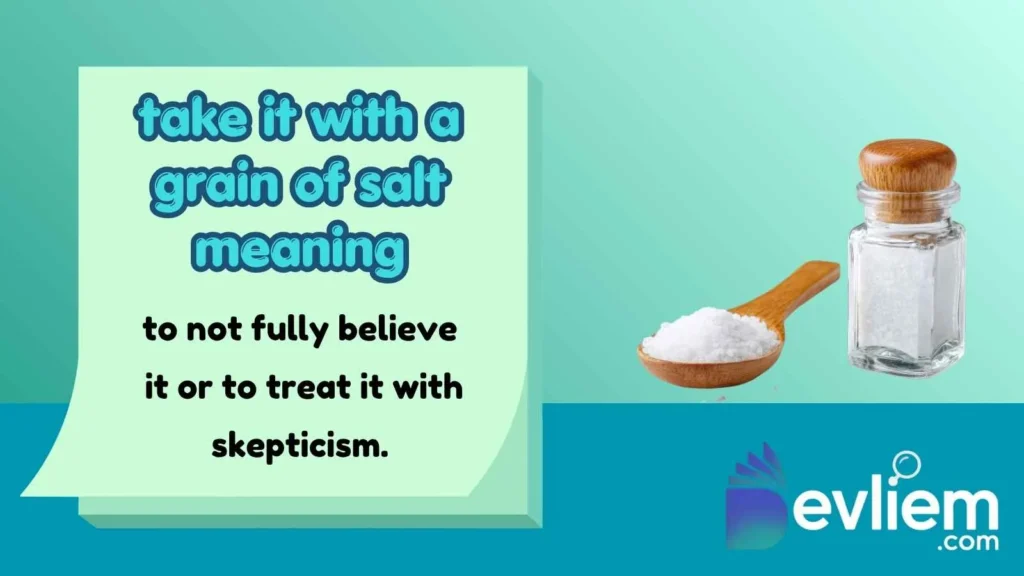
To take something with a grain of salt means to not fully believe it or to treat it with skepticism.
Quick Answer:
Take it with a grain of salt = Don’t fully trust what you hear; it might be exaggerated, biased, or untrue.
Origin of the Phrase
This idiom dates back to ancient Rome. The Latin phrase “cum grano salis” suggested that something should be taken with caution—or metaphorically, a pinch of salt to make it easier to accept.
Over time, the meaning evolved into what we use today: questioning the accuracy of information.
Pronunciation Guide
- Grain = “grayn”
- Salt = “sawlt”
- Phrase: tayk it with uh grayn uhv sawlt
How to Use “Take It With a Grain of Salt” Correctly in Texts & Chat
This phrase is widely used in casual communication—but context matters.
Tone & Context
- Casual: Very common
- Humorous: Often used jokingly
- Skeptical: Signals doubt
- Polite disagreement: Softens criticism
Where You’ll See It
- WhatsApp / SMS:
“Take it with a grain of salt, but I heard the exam might be postponed.” - Instagram / TikTok comments:
“Take this with a grain of salt… influencers exaggerate a lot.” - Discord / Gaming chats:
“Take it with a grain of salt, but that leak might be fake.” - Reddit threads:
“Take it with a grain of salt—no official source yet.”
When NOT to Use It
- Formal emails
- Academic writing
- Legal or professional documents
Instead, use alternatives like:
- “This information may not be reliable”
- “Further verification is needed”
Formatting Tips
- Usually lowercase
- No abbreviation
- Can pair with emojis:
- 🤔 (thinking)
- 🧂 (literal salt—yes, people use it!)
Real Conversation Examples Using “Take It With a Grain of Salt”
1. Between Friends
A: “Jake said he met a celebrity yesterday.”
B: “Hmm… take it with a grain of salt.”
👉 Meaning: B doubts Jake’s story.
2. In a Group Chat
A: “I heard the teacher is canceling the test.”
B: “Take that with a grain of salt—no official announcement yet.”
👉 Meaning: Be cautious, not confirmed.
3. Dating Scenario
A: “He said he’s never dated anyone before.”
B: “Girl… take that with a grain of salt.”
👉 Meaning: Possible skepticism or warning.
4. Workplace Chat (Casual)
A: “Rumor says layoffs are coming.”
B: “Let’s take it with a grain of salt for now.”
👉 Meaning: Don’t panic yet.
5. Gaming Context
A: “This new patch will fix everything.”
B: “Take it with a grain of salt—it’s just a leak.”
👉 Meaning: Not confirmed info.
Common Mistakes & Misunderstandings
1. Taking It Literally
Some non-native speakers think it involves actual salt. It doesn’t—it’s purely metaphorical.
2. Using It as Agreement
Wrong:
“I agree, take it with a grain of salt.”
Correct:
Use it to express doubt, not agreement.
3. Generational Confusion
- Gen Z: Uses it casually and often online
- Older generations: May interpret it more formally
- Non-native speakers: Might misunderstand tone
4. Cultural Differences
In some cultures, questioning information openly can seem rude—so tone matters.
How to Clarify
If someone doesn’t understand:
“I mean don’t fully believe it yet.”
“Take It With a Grain of Salt” Across Different Platforms & Demographics
Gen Z vs Millennials
- Gen Z: Uses it casually, often with sarcasm
- Millennials: Use it more literally and thoughtfully
Platform Popularity
- TikTok: Common in comments calling out fake content
- Instagram: Used in captions and replies
- Discord: Frequent in gaming discussions
- Reddit: Extremely common in debates and rumors
Formality Level
- Informal but widely accepted
- Semi-safe in relaxed workplaces
- Not suitable for strict professional writing
Viral Influence
The phrase gained renewed popularity with misinformation discussions and “fake news” culture—making it more relevant than ever.
Related Slang, Abbreviations & Alternatives
| Term | Meaning |
|---|---|
| Skeptical | Doubting the truth |
| Don’t buy it | Don’t believe it |
| Sounds sus | Seems suspicious |
| Cap / No cap | Lie / No lie |
| Question it | Don’t accept blindly |
| Rumor has it | Unverified info |
| Take lightly | Not serious |
| Doubt it | Express disbelief |
| Not convinced | Unsure about truth |
👉 Learn more about terms like “sus” or “no cap” to expand your slang vocabulary.
FAQs:
What does take it with a grain of salt mean?
It means you shouldn’t fully believe something because it may not be completely true. It encourages skepticism and careful thinking before accepting information.
Is it rude to say take it with a grain of salt?
Not usually. It’s a polite way to express doubt. However, tone matters—if said bluntly, it can sound dismissive.
Can I use it in professional settings?
In formal writing, avoid it. But in casual workplace chats, it’s generally acceptable.
What’s the difference between skepticism and cynicism?
Skepticism (like this phrase) means questioning information. Cynicism assumes everything is false or deceptive—more negative.
Are there British vs American differences?
Both use the phrase, though British English sometimes says “a pinch of salt” instead of “a grain of salt.”
Conclusion:
The phrase take it with a grain of salt meaning is all about healthy skepticism.
It reminds you not to blindly trust everything you hear especially in a world full of rumors, viral posts, and exaggerations.
It’s simple, powerful, and incredibly useful in everyday conversations.
Whether you’re chatting with friends or scrolling social media, this idiom helps you stay sharp and thoughtful.
Use it wisely, keep your tone friendly, and you’ll sound both natural and intelligent.
👉 Got a favorite slang phrase? Drop it in the comments and keep the conversation going!

Hi, I’m Emily Taylor, the voice behind Devliem.com, where meanings aren’t just explained, they’re made easy to understand.
I’ve always been fascinated by words, the way they change, evolve, and sometimes confuse us more than they should. That curiosity turned into a mission: to break down complex meanings, trending slang, and everyday expressions into something clear, simple, and actually useful.