Ever heard someone say they’ve been placed on administrative leave and wondered what that actually means? It sounds serious, but is it bad news or just a routine HR process?
The administrative leave meaning has become more relevant than ever in modern workplaces, especially with growing awareness around workplace policies, investigations, and employee rights. Whether you’re an employee, manager, or just curious, understanding this term can help you navigate tricky professional situations with confidence.
Updated for 2026, this guide breaks everything down in plain English. You’ll learn what administrative leave really means, when it’s used, how it differs from suspension, and what it feels like in real-life scenarios.
What Does “Administrative Leave” Mean?
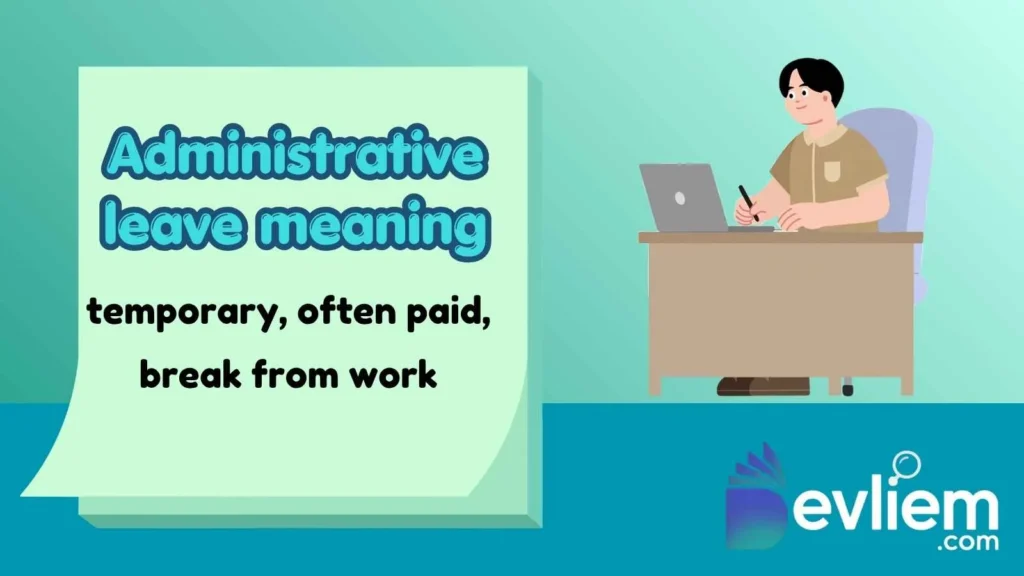
Administrative leave refers to a temporary period when an employee is asked to stay away from work duties—usually with pay—while the employer addresses a specific situation.
Quick Answer:
Administrative leave means a temporary, often paid, break from work given by an employer during investigations, workplace concerns, or special circumstances.
Origin & Evolution
The concept comes from formal HR and government workplace systems. It gained traction in the following:
- Public sector jobs (police, education, government)
- Corporate HR departments
- Legal and compliance-driven workplaces
Over time, it evolved into a standard tool for handling sensitive situations without jumping to conclusions.
Pronunciation
ad-min-uh-stray-tiv leave
How to Use “Administrative Leave” Correctly in Workplace Context
Unlike internet slang, this phrase is formal and professional.
Tone & Context
- Neutral or serious tone
- Used in official communication
- Often appears in HR emails or announcements
Where You’ll See It
- Email: “You are being placed on administrative leave effective immediately.”
- Workplace meetings
- Legal or HR documentation
- News reports
When to Use It
✔ During investigations
✔ When workplace safety is a concern
✔ For conflict resolution situations
✔ In compliance/legal scenarios
When NOT to Use It
✘ Casual conversations
✘ Informal chats or jokes
✘ Non-work-related situations
Real Conversation Examples Using “Administrative Leave”
1. Workplace Scenario
Manager: “We’re placing you on administrative leave while we review the situation.”
Employee: “Understood. Will I still be paid?”
👉 Meaning: Neutral action, not necessarily punishment.
2. News Context
Reporter: “The officer has been placed on administrative leave pending investigation.”
👉 Meaning: Standard procedure while facts are reviewed.
3. HR Discussion
HR Rep: “Administrative leave allows us to investigate fairly without bias.”
👉 Meaning: Protective step for both employer and employee.
4. Employee Chat
Colleague 1: “Did you hear about Sarah?”
Colleague 2: “Yeah, she’s on administrative leave for now.”
👉 Meaning: Something serious is being reviewed, but outcome unknown.
5. Corporate Email
“Effective today, you are placed on administrative leave with full pay until further notice.”
👉 Meaning: Formal, documented action.
Common Mistakes & Misunderstandings
1. Thinking It Means You’re Fired
Not true. You’re still employed—just temporarily removed from duties.
2. Confusing It with Suspension
- Administrative leave = often neutral
- Suspension = often disciplinary
3. Assuming It’s Always Negative
Sometimes it’s precautionary—not a punishment.
4. Generational Confusion
- Younger employees may panic instantly
- Experienced professionals see it as procedural
Administrative Leave Across Different Workplaces & Demographics
Corporate Sector
- Used for HR investigations
- Common in large organizations
Government Jobs
- Extremely common
- Standard protocol in sensitive roles
Startups
- Less formal, but still used in serious cases
Generational Perspective
- Gen Z: May associate it with job risk
- Millennials: More aware of HR processes
- Older professionals: View it as routine
Is It Safe for Work?
Yes—it’s a formal workplace term.
Related Terms, Abbreviations & Alternatives
| Term | Meaning |
|---|---|
| Suspension | Temporary removal, often disciplinary |
| Paid Leave | Time off with salary |
| Unpaid Leave | Time off without pay |
| Leave of Absence | Extended time away from work |
| Furlough | Temporary unpaid leave due to business reasons |
| HR Investigation | Internal workplace inquiry |
| Disciplinary Action | Punishment for policy violations |
| Termination | Permanent job ending |
| Probation | Monitoring period for employees |
FAQs:
What does administrative leave mean at work?
Administrative leave means an employee is temporarily relieved of duties—usually with pay—while the employer handles an internal issue, investigation, or concern. It’s not automatically a punishment and often serves as a neutral step.
Is administrative leave paid or unpaid?
Most administrative leave is paid. Employers typically continue salary and benefits while the employee is away from work. However, policies vary, so it’s always best to verify your company’s HR guidelines.
Is administrative leave the same as suspension?
No. Administrative leave is usually precautionary and neutral, while suspension often indicates disciplinary action. The intent and tone behind each are completely unique.
Can you be fired after administrative leave?
Yes, depending on the findings. If an investigation reveals misconduct, termination may follow. But often, employees return to work with no further action.
How long does administrative leave last?
It can last anywhere from a few days to several weeks. The duration depends on the complexity of the situation or investigation.
Conclusion:
Understanding the administrative leave meaning helps you stay calm and informed if you ever encounter it. It’s not automatically bad news; it’s often just a structured way for employers to handle sensitive situations.
Think of it as a pause, not an ending. A step back, not a step out.
Whether you’re navigating your career or just staying informed, knowing terms like administrative leave gives you an edge in today’s workplace.
👉 Got questions or experiences with workplace policies? Drop them below and join the conversation.

Hi, I’m Emily Taylor, the voice behind Devliem.com, where meanings aren’t just explained, they’re made easy to understand.
I’ve always been fascinated by words, the way they change, evolve, and sometimes confuse us more than they should. That curiosity turned into a mission: to break down complex meanings, trending slang, and everyday expressions into something clear, simple, and actually useful.