Ever smiled politely while completely disagreeing inside? Or said I’m fine when you clearly weren’t?
That subtle gap between what you feel and what you show – that’s where the meaning of ‘dissimulation’ comes into play.
In today’s world of texts, social media, and fast communication, understanding nuanced words like dissimulation is more important than ever.
It’s not just a fancy dictionary term; it shows up in real conversations, workplace dynamics, and even online interactions.
In this updated 2026 guide, you’ll learn exactly what dissimulation means, how to use it naturally, real-life examples, and the common mistakes people make.
By the end, you’ll not only understand the word, but you’ll also recognise it instantly in everyday life.
What Does “Dissimulation” Mean?
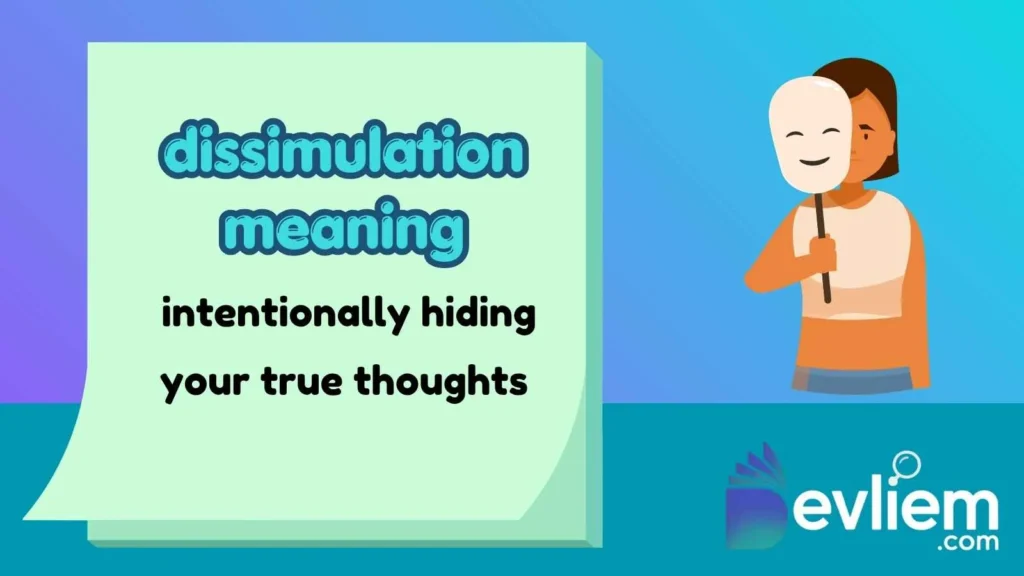
Dissimulation means intentionally hiding your true thoughts, feelings, or intentions, often by pretending or giving a misleading impression.
Quick Answer:
Dissimulation is the act of concealing your true feelings or intentions without necessarily lying outright.
Origin & Etymology
The word comes from the Latin “dissimulare”, meaning “to disguise” or “to conceal”. It entered English in the 15th century and has long been used in literature, philosophy, and psychology.
How the Meaning Has Evolved
Originally tied to political strategy and philosophy, today it’s widely used in the following:
- Psychology (emotional masking)
- Workplace communication
- Everyday social interactions
Pronunciation
di·sim·yu·LAY·shun
How to Use “Dissimulation” Correctly in Texts & Chat
Tone & Context
Dissimulation usually carries a slightly serious or analytical tone. It’s often used when discussing:
- Behavior patterns
- Emotional masking
- Strategic communication
Where You’ll See It
SMS / WhatsApp:
Rare, but might appear in thoughtful conversations
“That feels like dissimulation, not honesty.”
Instagram / TikTok captions:
Used in reflective or intellectual posts
“Tired of emotional dissimulation.”
Twitter/X:
Common in debates or commentary
“That’s not honesty—it’s dissimulation.”
Discord / Reddit:
More frequent in discussions about psychology or relationships
When NOT to Use It
Avoid using “dissimulation” in the following:
- Casual slang-heavy chats (“””LOL”/”BRB” vibe doesn’t fit)
- Professional emails unless context is analytical
- Situations where simpler words like “hiding feelings” work better
Formatting Tips
- Typically lowercase: dissimulation
- No emojis needed (it’s a serious term)
- Works best in full sentences
Real Conversation Examples Using “Dissimulation”
1. Between Friends
A: “You said you were okay, but you seemed off.”
B: “Yeah… I guess I was dissimulating.”
👉 Emotion: Admitting emotional masking
2. In a Relationship
A: “Why didn’t you tell me how you felt?”
B: “I didn’t want to upset you—it was dissimulation.”
👉 Emotion: Avoiding conflict
3. Workplace Chat
Manager: “There’s a lot of dissimulation in meetings—people aren’t being honest.”
👉 Emotion: Frustration with lack of transparency
4. Group Chat
Friend 1: “He said he liked the plan.”
Friend 2: “That felt like dissimulation to me.”
👉 Emotion: Suspicion or doubt
5. Gaming / Online Discussion
Player: “He’s pretending to help but sabotaging—classic dissimulation.”
👉 Emotion: Strategic deception
Common Mistakes & Misunderstandings
1. Confusing Dissimulation with Lying
Not all dissimulation involves lies.
- Dissimulation: Hiding truth
- Lying: Saying something false
2. Overusing It in Casual Chat
It’s not everyday slang like “OMG” or “LOL”. Using it too often can sound unnatural.
3. Generational Confusion
- Gen Z: Rarely uses it directly; prefers simpler phrases
- Millennials: Use it occasionally in deeper discussions
- Older generations: More familiar with the term
4. Cultural Differences
In some cultures, dissimulation is seen as politeness (saving face), while in others it may be viewed as dishonesty.
“Dissimulation” Across Different Platforms & Demographics
Gen Z vs Millennials vs Others
- Gen Z: “Fake”, “acting”, “masking”
- Millennials: Mix of casual and formal terms
- Professionals: Use “dissimulation” in analysis
Platform Trends
- TikTok: Indirect references (e.g., “emotional masking”)
- Instagram: Used in captions about mental health
- Discord: Common in intellectual discussions
- Reddit: Frequently used in psychology threads
Formality Level
- ❌ Not casual slang
- ✅ Semi-formal to formal
- ⚠️ Not ideal for workplace emails unless precise
Related Slang, Abbreviations & Alternatives
| Term | Meaning |
|---|---|
| Masking | Hiding true emotions |
| Fake | Acting inauthentic |
| Fronting | Pretending to be something you’re not |
| Deception | Intentionally misleading |
| Concealment | Keeping something hidden |
| Pretending | Acting differently from reality |
| Facade | False outward appearance |
| Double-faced | Acting differently behind the scenes |
| Suppression | Holding back emotions |
| Misrepresentation | Giving a false impression |
👉 Internal idea: Learn more about emotional masking meaning or gaslighting definition for deeper context.
FAQs:
What does dissimulation mean in simple words?
Dissimulation means hiding what you truly think or feel. Instead of expressing your real emotions, you act differently to conceal them. It’s like putting on a mask in social situations.
Is dissimulation always negative?
Not always. It can help avoid conflict or protect feelings. However, overusing it can damage trust because people may feel you’re not being genuine.
What’s the difference between dissimulation and deception?
Dissimulation is about hiding the truth, while deception often includes actively misleading someone. One conceals; the other manipulates.
Can dissimulation be unconscious?
Yes. Sometimes people hide emotions automatically without realising it, especially in stressful or socially sensitive situations.
Where is dissimulation commonly used?
It appears in psychology, communication studies, relationships, and workplace dynamics—basically anywhere human interaction involves hidden emotions.
Conclusion:
Understanding ‘dissimulation’ meaning gives you a sharper lens for reading people and yourself. It’s not just a formal word; it describes something we all do at times.
In small doses, dissimulation can smooth social interactions. But when overused, it creates distance and confusion.
Knowing when to be honest and when to hold back is the real skill.
Now that you know how to spot and use it, you’ll notice it everywhere from conversations to social media.
👉 Got a favourite word or slang you want explained next? Drop it below and keep exploring!

Hi, I’m Emily Taylor, the voice behind Devliem.com, where meanings aren’t just explained, they’re made easy to understand.
I’ve always been fascinated by words, the way they change, evolve, and sometimes confuse us more than they should. That curiosity turned into a mission: to break down complex meanings, trending slang, and everyday expressions into something clear, simple, and actually useful.