Ever signed up for a tool and got handed a weird string of letters and numbers like That mystery code usually has one job: access.
The API key meaning is simple once you strip away the tech jargon.
It’s a digital identifier that allows one app, website, or system to talk to another through an API.
If you’ve used Google Maps on a website, connected payment tools like Stripe, or experimented with AI apps, there’s a good chance an API key was involved.
Why should this matter to you in 2026? Because APIs power modern apps, and understanding API keys helps developers, business owners, marketers, and curious beginners stay secure and informed.
In this guide, you’ll learn what an API key is, how it works, where it’s used, common mistakes to avoid, and how to protect one properly. Updated for 2026.
What Does “API Key” Mean?
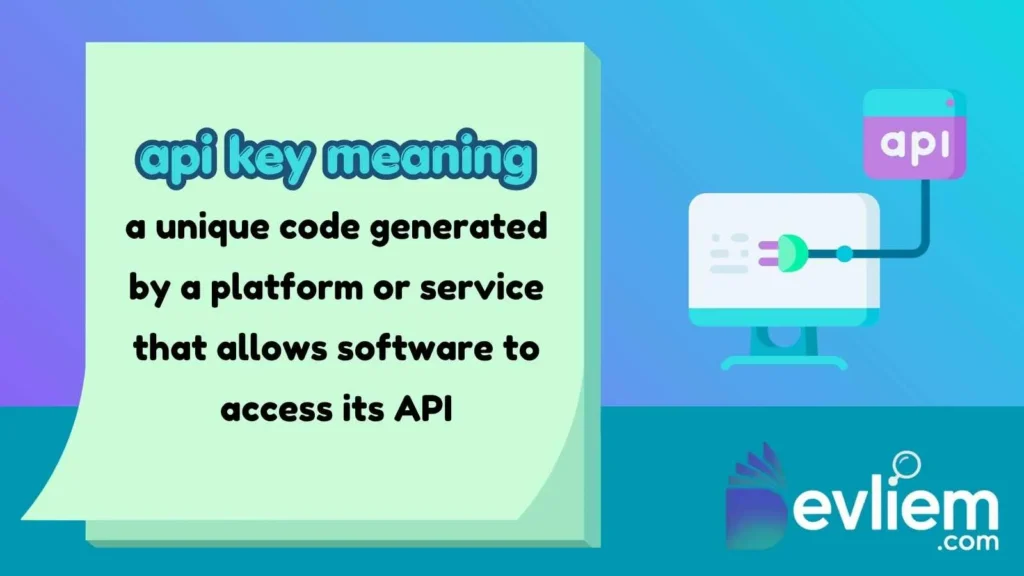
An API key is a unique code generated by a platform or service that allows software to access its API.
API stands for Application Programming Interface. Think of an API as a waiter carrying requests between two systems. The API key is your reservation card proving you’re allowed in.
Quick Answer
API key meaning: A unique identifier used by apps or developers to access another service’s API and track usage securely.
Origin of the Term
API usage became common in the early web era, but API keys became mainstream when platforms like Google Maps, Twitter, and payment gateways opened developer access.
As cloud software exploded, API keys became standard for tracking requests, billing usage, and controlling access.
How Meaning Has Evolved
Originally, API keys were mostly simple access identifiers. Today, they often work alongside tokens, OAuth, rate limits, and permissions.
Pronunciation
Most people say it letter by letter.
A-P-I key
How to Use “API Key” Correctly in Texts & Chat
The phrase is mostly used in tech conversations, work chats, coding communities, and startup discussions.
Casual Usage
- “Can you send me the API key for testing?”
- “My API key expired.”
- “Need a new API key for the dashboard.”
Professional Usage
Perfectly normal in work chats, Slack, Discord dev servers, email, and project docs.
Where NOT to Use It Casually
If someone isn’t technical, saying “just use the API key” may confuse them fast.
Instead, say:
- “You need an access code for the software connection.”
- “We need credentials from the provider.”
Formatting Tips
- Use uppercase: API key
- Sometimes written as ‘API key’
- Avoid writing the full key in public chats
- Often paired with terms like token, endpoint, secret, request
Real Conversation Examples Using “API Key”
Between Developers
Alex: Why isn’t the weather app loading?
Maya: The API key hit its usage limit.
Meaning: The app exceeded allowed requests.
In a Startup Team Chat
Manager: Can we launch payments today?
Dev: Need the live API key from Stripe first.
Meaning: Production credentials are required.
Freelancer & Client
Client: Why does Maps look blank?
Freelancer: Your Google API key was disabled.
Meaning: Access was revoked or misconfigured.
In a Gaming Community
User: How does this Discord bot work?
Admin: It uses an API key to fetch stats.
Meaning: External service connection powers the feature.
Family Tech Help
Sibling: Why can’t your AI tool answer?
You: My API key ran out of credits.
Meaning: Paid usage quota is exhausted.
Common Mistakes & Misunderstandings
1. Thinking It’s a Password
An API key is not exactly a password. It identifies requests from software rather than logging in a person.
2. Sharing It Publicly
Many beginners post keys in screenshots, GitHub repos, or forums. That’s like taping your house key to the front door.
3. Assuming All Keys Are Safe to Expose
Some public keys are okay client-side. Secret keys are not.
Generational Confusion
- Gen Z beginners may think it’s “just another login code”.
- Older non-tech users may assume it’s a banking PIN.
How to Clarify
Say:
“An API key lets apps talk to services securely.”
“API Key” Across Different Platforms & Demographics
Developers
Use the term daily in docs, Slack, GitHub, and cloud dashboards.
Marketers
May encounter API keys when connecting CRMs, analytics tools, or automation platforms.
Entrepreneurs
Often see them while integrating payments, AI chatbots, or booking systems.
On Popular Platforms
- Discord: Bot setup and automation tools
- Reddit: Common in dev support communities
- X / Twitter: API discussions and automation talk
- YouTube: Tutorials on generating API keys
- TikTok: Beginner coding explainers increasingly mention them
Formal or Informal?
Neutral technical language. Fine in professional settings.
Related Slang, Abbreviations & Alternatives
| Term | Meaning |
|---|---|
| API | Application Programming Interface |
| Token | Temporary access credential |
| OAuth | Secure delegated login system |
| Secret Key | Private credential that must stay hidden |
| Endpoint | URL where API requests are sent |
| Webhook | Automated event notification |
| SDK | Software development kit |
| Auth | Short for authentication |
| Rate Limit | Maximum allowed requests |
| Credential | Login or access information |
Suggested internal anchors:
- Learn more about API vs SDK
- Read OAuth meaning explained
- See what authentication is.
FAQs:
What is the meaning of an API key in simple words?
It means a unique code that lets one app connect to another service’s API. It acts like a digital pass.
Is an API key sensitive?
Often yes. Public keys may be visible, but secret keys should always be protected.
Can I use one API key for multiple apps?
Sometimes, but it’s smarter to separate keys by project for better security and tracking.
How do I get an API key?
Usually by creating an account on a platform and generating one in the developer dashboard.
What if someone steals my API key?
They may use your quota, access data, or create charges. Revoke it immediately and rotate keys.
API key vs token: what’s the difference?
API keys identify the app. Tokens often represent temporary user authorisation.
Conclusion:
The API key meaning is straightforward: it’s a code that helps software access online services through APIs.
These tiny strings power maps, payments, AI tools, bots, analytics, and thousands of apps you use daily.
Understand them, protect them, and never paste one carelessly online. That one habit can save money and headaches.
Drop your favourite tech term you’d like decoded next.

Hi, I’m Emily Taylor, the voice behind Devliem.com, where meanings aren’t just explained, they’re made easy to understand.
I’ve always been fascinated by words, the way they change, evolve, and sometimes confuse us more than they should. That curiosity turned into a mission: to break down complex meanings, trending slang, and everyday expressions into something clear, simple, and actually useful.