Ever heard someone say, ‘Let’s settle this through mediation’ and wondered what that actually means? You’re not alone.
The phrase ‘mediation meaning’ is searched by students, professionals, couples, and business owners every day, and for good reason.
Conflict is part of life. It happens at work, at home, in business deals, and even between neighbours arguing over a fence.
But not every disagreement needs a courtroom battle. That’s where mediation steps in.
In simple terms, mediation is often the smarter, calmer, and cheaper path to solving disputes.
It helps people talk, negotiate, and move forward with help from a neutral expert.
In this updated 2026 guide, you’ll learn the exact meaning of mediation, where it’s used, how the process works, real-life examples, common misconceptions, and when mediation is better than going to court.
If you want a plain-English answer with practical value, you’re in the right place.
What Does “Mediation Meaning” Mean?
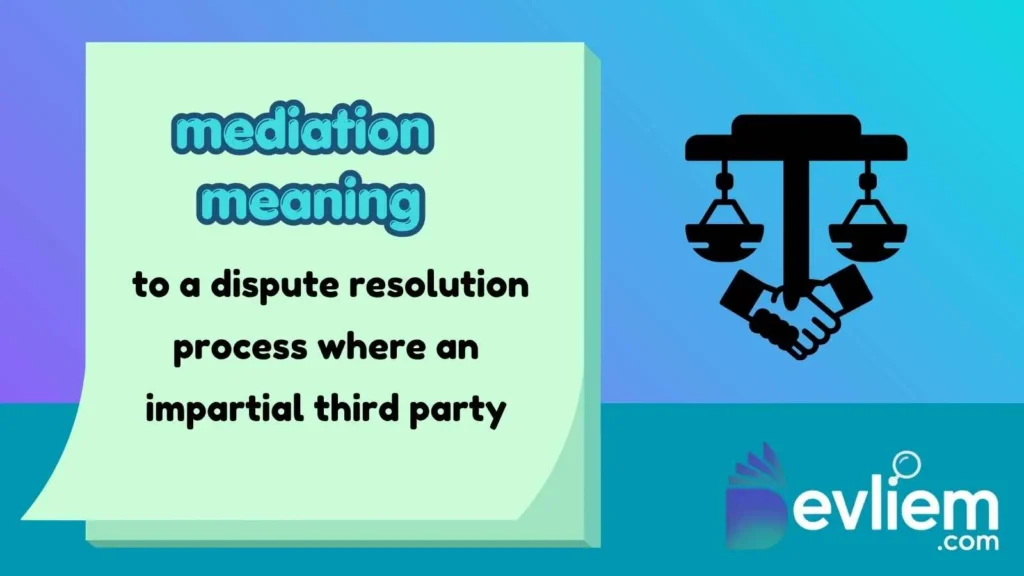
‘Mediation’ meaning refers to a dispute resolution process where an impartial third party, called a ‘mediator’, helps conflicting sides communicate and reach a voluntary agreement.
Quick Answer: Mediation is a peaceful method of solving disagreements with the help of a neutral person.
Origin of the Word
The word “mediation” comes from the Latin “mediare”, meaning “to be in the middle”. That perfectly describes the mediator’s role: standing in the middle—not taking sides, but guiding both parties toward common ground.
How the Meaning Has Evolved
Historically, village elders, religious leaders, and community heads often acted as informal mediators. Today, mediation is formalised and widely used in:
- Divorce cases
- Workplace disputes
- Commercial contracts
- Labor negotiations
- International diplomacy
- Community conflicts
Pronunciation Guide
Mediation = mee-dee-AY-shun
How to Use “Mediation” Correctly in Conversation & Writing
Unlike slang terms, mediation is a formal word used in professional, legal, and everyday settings.
Correct Contexts
Use mediation when discussing:
- Solving disputes
- Negotiation help
- Family settlements
- Workplace conflict
- Legal alternatives to trial
Examples
✅ “The company suggested mediation before filing a lawsuit.”
✅ “They used mediation to settle custody issues.”
✅ “Our landlord dispute ended through mediation.”
When NOT to Use It
Avoid using ‘mediation’ when you mean the following:
- Therapy
- Arbitration
- Court judgment
- Counseling
These are different processes.
Tone and Style
Mediation usually carries a calm, constructive tone. It suggests cooperation instead of fighting.
Real Conversation Examples Using “Mediation”
Between Divorcing Parents
Sara: We keep arguing about visitation.
Ali: Maybe mediation would help us agree faster.
Meaning: They want neutral help instead of escalating conflict.
In the Workplace
Manager: HR recommends mediation between both departments.
Meaning: A structured way to repair communication.
Business Partners
Partner A: We disagree on profit sharing.
Partner B: Let’s try mediation before lawyers get involved.
Meaning: Save time and money.
Neighbor Dispute
Your tree branches damaged my wall.
We should consider mediation.
Meaning: Solve peacefully before hostility grows.
School Setting
Teacher: Student mediation can help resolve bullying conflicts.
Meaning: Guided resolution and accountability.
Common Mistakes & Misunderstandings
1. Thinking the Mediator Makes the Final Decision
Wrong. A mediator does not judge or impose outcomes. They guide discussion.
2. Confusing Mediation with Arbitration
Arbitration often ends with a binding decision from the arbitrator. Mediation focuses on mutual agreement.
3. Believing Mediation Means Weakness
Actually, mediation often shows maturity, strategy, and emotional intelligence.
Generational Differences
Older generations may prefer court or authority figures. Younger professionals often prefer collaborative solutions.
How to Clarify
Say:
“Mediation means a neutral person helps both sides agree—it’s not court.”
“Mediation Meaning” Across Different Platforms & Demographics
Legal Industry
Very common in family law, civil disputes, and employment cases.
Corporate World
Used for HR complaints, leadership conflicts, and vendor disagreements.
Education
Schools use peer mediation programmes to reduce bullying and fights.
International Politics
Countries often rely on mediation during peace talks.
Is It Formal or Informal?
Both.
- Informal: Family disagreements
- Formal: Court-referred mediation
Safe for Work?
Yes. Fully professional term.
Related Terms, Alternatives & Similar Concepts
| Term | Meaning |
|---|---|
| Negotiation | Direct discussion between parties |
| Arbitration | A neutral party makes the decision. |
| Conciliation | Similar to mediation, often more advisory |
| Settlement | Final agreement reached |
| Litigation | Court-based dispute process |
| Conflict Resolution | Broad category of solving disputes |
| Facilitation | Helping discussion flow |
| Compromise | Each side gives something |
| Diplomacy | Negotiation between nations |
| Reconciliation | Restoring relationships |
Learn more about negotiation, arbitration, litigation, and conflict resolution.
FAQs:
What is the basic meaning of mediation?
Mediation is a process where a neutral third party helps people settle disputes through communication and agreement.
Is mediation better than court?
Often yes. It can be faster, cheaper, more private, and less stressful than litigation.
Can mediation fail?
Yes. If parties refuse compromise, mediation may end without agreement.
Is mediation confidential?
Usually yes, depending on local laws and agreements.
Do you need a lawyer in mediation?
Not always, but legal advice can be useful for serious disputes.
How long does mediation take?
Some cases resolve in one session. Complex disputes may take several meetings.
Conclusion:
The true mediation meaning goes beyond a dictionary definition. It represents a smarter way to solve conflict through calm discussion and guided negotiation.
Instead of turning every disagreement into a battle, mediation creates room for understanding, compromise, and practical solutions.
Whether it’s family drama, business tension, or legal conflict, mediation can save time, money, and relationships.
Got a favourite legal or communication term you’d like explained next? Drop it in the comments below.

Hi, I’m Emily Taylor, the voice behind Devliem.com, where meanings aren’t just explained, they’re made easy to understand.
I’ve always been fascinated by words, the way they change, evolve, and sometimes confuse us more than they should. That curiosity turned into a mission: to break down complex meanings, trending slang, and everyday expressions into something clear, simple, and actually useful.