You’ve probably heard someone say, He’s a blue collar guy in movies, social media comments, dating conversations, or even job discussions.
But what does it actually mean today?
The phrase blue collar man meaning has evolved far beyond factory floors and dusty work boots. In 2026, it often describes hardworking men in skilled trades, hands-on careers, and practical industries — but it also carries cultural and lifestyle meanings tied to masculinity, work ethic, and authenticity.
Some people use it proudly. Others misunderstand it completely.
This guide breaks down exactly what a blue collar man is, where the term came from, how people use it online and offline, and why it still matters in modern culture. You’ll also see real conversation examples, common misunderstandings, and how the phrase compares with terms like white collar and working class.
Updated for 2026, this is your complete beginner-friendly guide.
What Does “Blue Collar Man” Mean?
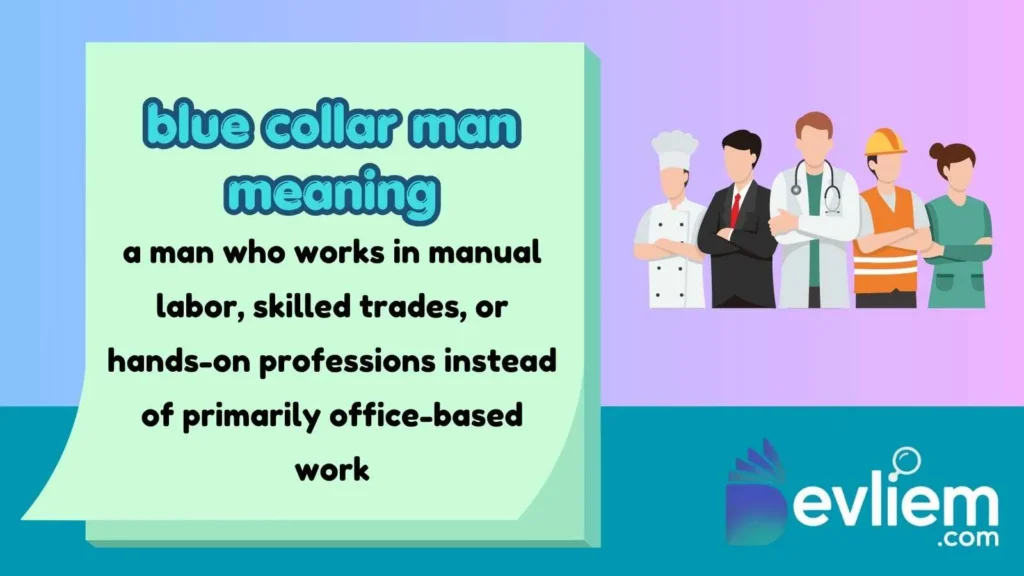
A blue collar man is a man who works in manual labor, skilled trades, or hands-on professions instead of primarily office-based work.
These jobs usually involve physical tasks, technical skills, machinery, repair work, construction, transportation, or manufacturing.
Common examples include:
- Electricians
- Welders
- Mechanics
- Truck drivers
- Construction workers
- Plumbers
- Factory workers
- HVAC technicians
Quick Answer:
A blue collar man is someone who works in practical, physical, or trade-based jobs, often requiring technical skills and hands-on labor rather than office work.
Where Did the Term Come From?
The phrase dates back to the early 1900s in the United States.
Industrial and factory workers commonly wore durable blue denim or chambray shirts because darker colors hid dirt, grease, and sweat better during physical labor. Office workers, meanwhile, often wore white dress shirts.
That’s how the terms evolved:
- Blue collar = manual labor and trade work
- White collar = office and professional work
Over time, the phrase became more cultural than literal.
Today, a blue collar man may not even wear blue clothing. The term now symbolizes practical skills, grit, hard work, and trade expertise.
Pronunciation Guide
Blue collar man is pronounced:
BLOO KAH-lur man
How to Use “Blue Collar Man” Correctly in Texts & Chat
The phrase is usually casual, descriptive, and culturally loaded rather than insulting.
People often use it to describe:
- Career type
- Personality
- Lifestyle
- Dating preferences
- Work ethic
- Social identity
Common Modern Usage
Examples:
- “She likes blue collar men because they’re hardworking.”
- “My dad’s a blue collar guy who’s been welding for 20 years.”
- “Blue collar workers keep the country running.”
Tone and Context
The phrase can sound:
- Respectful
- Admiring
- Stereotypical
- Romanticized
- Political
- Class-related
The meaning depends heavily on context.
Platform-Specific Usage
SMS & WhatsApp
Usually used casually in conversations about jobs, dating, or lifestyle.
Example:
“He’s more of a blue collar type than a corporate guy.”
Instagram & TikTok
Often connected with aesthetics and lifestyle trends:
- Work boots
- Pickup trucks
- Trade work videos
- “Hardworking man” culture
Reddit & Discord
More discussion-focused:
- Salary debates
- Trade school advice
- Blue collar vs white collar culture
X formerly Twitter
Frequently appears in political, economic, or cultural conversations.
When NOT to Use It
Avoid using the term:
- In formal HR evaluations
- As a stereotype
- To imply someone is uneducated
- In professional introductions unless relevant
Bad example:
“He’s just a blue collar guy.”
That can sound dismissive depending on tone.
Formatting Tips
People usually write it:
- lowercase: blue collar
- hyphenated as adjective: blue-collar worker
Examples:
- blue collar man
- blue-collar job
- blue-collar lifestyle
Emoji pairings online often include:
🔧 🚚 👷 🛠️ 💪
Real Conversation Examples Using “Blue Collar Man”
Between Friends
Jake: “What does your boyfriend do?”
Mia: “He’s a blue collar guy. Works construction.”
Jake: “Honestly, those dudes work harder than most office people.”
Meaning:
Here, “blue collar” emphasizes physical labor and strong work ethic.
In a Dating Conversation
Sara: “I don’t really go for finance bros.”
Emma: “Same. I like blue collar men way more.”
Meaning:
The phrase suggests authenticity, practicality, and masculinity.
Family Discussion
Dad: “Your uncle’s been a blue collar worker his whole life.”
Son: “Yeah, he’s a mechanic, right?”
Meaning:
Used neutrally to describe long-term trade employment.
Work Chat
Chris: “My company hires both office staff and blue collar workers.”
Lena: “Makes sense for manufacturing.”
Meaning:
Differentiates labor-based roles from administrative positions.
Gaming Discord Chat
User1: “Why are you online so late?”
User2: “Blue collar schedule, bro. Up at 5 every morning.”
Meaning:
Suggests physically demanding early-shift work.
Common Mistakes & Misunderstandings
1. Assuming Blue Collar Means Poor
This is outdated and often false.
Many blue collar professionals earn excellent salaries, especially:
- Welders
- Electricians
- Crane operators
- Oil field workers
- Union tradespeople
Some skilled trades make more than office jobs.
2. Thinking It Means Uneducated
A huge misconception.
Modern blue collar jobs often require:
- Certifications
- Apprenticeships
- Technical training
- Licensing
- Safety education
Trade expertise is highly specialized.
3. Using It as a Personality Stereotype
Not every blue collar man:
- Drives a truck
- Loves country music
- Hates technology
- Avoids higher education
Internet culture sometimes exaggerates stereotypes.
Generational Differences
Gen Z
Often romanticizes blue collar culture online.
Millennials
Usually discuss it in economic or lifestyle terms.
Older Generations
May connect it more directly with labor unions and industrial work.
Regional Differences
In the U.S., Canada, Australia, and parts of Europe, the term is widely recognized.
In some countries, people may simply say:
- manual worker
- tradesman
- laborer
- skilled worker
How to Clarify If Someone Doesn’t Understand
Simple explanation:
“It means someone who works in hands-on trade or labor jobs.”
Easy and non-judgmental.
“Blue Collar Man” Across Different Platforms & Demographics
Gen Z Usage
TikTok and Instagram have heavily reshaped blue collar culture.
You’ll see:
- “Blue collar boyfriend” trends
- Trade work day-in-the-life videos
- Welding and construction clips
- “Work hard” masculinity edits
For many Gen Z users, blue collar means:
- reliable
- masculine
- practical
- authentic
Sometimes it’s almost treated like an aesthetic.
Millennials and Older Users
Millennials often discuss blue collar jobs in relation to:
- job security
- student debt
- trade school alternatives
- economic independence
Older generations may view it through:
- union history
- manufacturing
- labor identity
Is It Formal or Informal?
The phrase is semi-informal.
Safe in:
- casual discussion
- journalism
- workplace conversation
- economic analysis
Less ideal in:
- formal resumes
- legal documents
- executive communication
Why the Term Became Trendy Again
Several trends pushed the phrase back into mainstream culture:
- Rising trade salaries
- College debt concerns
- TikTok trade content
- Skilled labor shortages
- Online masculinity discussions
The internet also started glamorizing “working with your hands” again.
Related Slang, Abbreviations & Alternatives
| Term | Meaning |
|---|---|
| White collar | Office or professional worker |
| Gray collar | Mix of office and manual work |
| Pink collar | Caregiving or service-oriented jobs |
| Tradesman | Skilled manual worker |
| Working class | Socioeconomic labor category |
| Skilled labor | Specialized physical work |
| Union worker | Laborer represented by a union |
| Corporate guy | Office-focused professional |
| Hands-on worker | Someone who works physically |
| Laborer | Physical work employee |
Synonyms in Casual Conversation
People also say:
- working man
- trade worker
- construction guy
- skilled worker
Opposite Terms
Common opposites include:
- white collar worker
- corporate employee
- office professional
FAQs:
What does blue collar man mean in dating?
In dating conversations, “blue collar man” usually refers to a hardworking, practical man with a trade or labor-based career. Online, the phrase often carries stereotypes about masculinity, reliability, and strong work ethic.
Is blue collar a compliment?
Usually yes. In modern usage, it often implies someone is hardworking, skilled, dependable, and practical. However, tone matters. Used sarcastically, it can sound dismissive or class-based.
What jobs are considered blue collar?
Blue collar jobs include construction, plumbing, welding, trucking, manufacturing, electrical work, mechanics, HVAC repair, and many skilled trades involving hands-on labor.
Can blue collar workers make six figures?
Absolutely. Many experienced tradespeople earn six figures, especially in union positions, industrial work, oil fields, specialized welding, and high-demand technical trades.
Is blue collar the same as working class?
Not exactly. Blue collar refers mainly to job type, while working class relates more to socioeconomic category. There’s overlap, but they are not identical terms.
Are blue collar jobs disappearing?
No. In fact, many industries currently face skilled labor shortages. Demand for electricians, mechanics, welders, and construction workers remains strong in 2026.
Conclusion:
The modern blue collar man meaning goes far beyond old stereotypes about factory work and dusty uniforms.
Today, the phrase represents skilled labor, practical expertise, strong work ethic, and hands-on careers that keep industries moving every single day.
Whether you see the term on TikTok, hear it in a dating conversation, or read it in economic discussions, understanding its real meaning helps you avoid outdated assumptions and recognize how much modern culture has changed.
Got a favorite slang term or internet phrase you want decoded next? Drop it in the comments and explore more modern slang guides below.

Hi, I’m Emily Taylor, the voice behind Devliem.com, where meanings aren’t just explained, they’re made easy to understand.
I’ve always been fascinated by words, the way they change, evolve, and sometimes confuse us more than they should. That curiosity turned into a mission: to break down complex meanings, trending slang, and everyday expressions into something clear, simple, and actually useful.