The term housekeeping is commonly associated with cleaning and maintaining a home, hotel, office, or other living and working spaces.
However, its meaning goes beyond simple cleaning tasks.
Housekeeping includes organizing, maintaining cleanliness, ensuring safety, and creating a comfortable environment for residents, guests, or employees.
In everyday life, housekeeping refers to routine chores such as dusting, vacuuming, laundry, and tidying rooms.
In professional settings like hotels and hospitals, housekeeping involves a wide range of responsibilities aimed at maintaining hygiene, order, and high standards of cleanliness.
Understanding the meaning of housekeeping can help individuals appreciate its importance in both personal and professional environments.
This guide explains the meaning of housekeeping, its various uses, examples, origin, and why it plays a vital role in daily life.
Housekeeping Meaning: A Simple Explanation
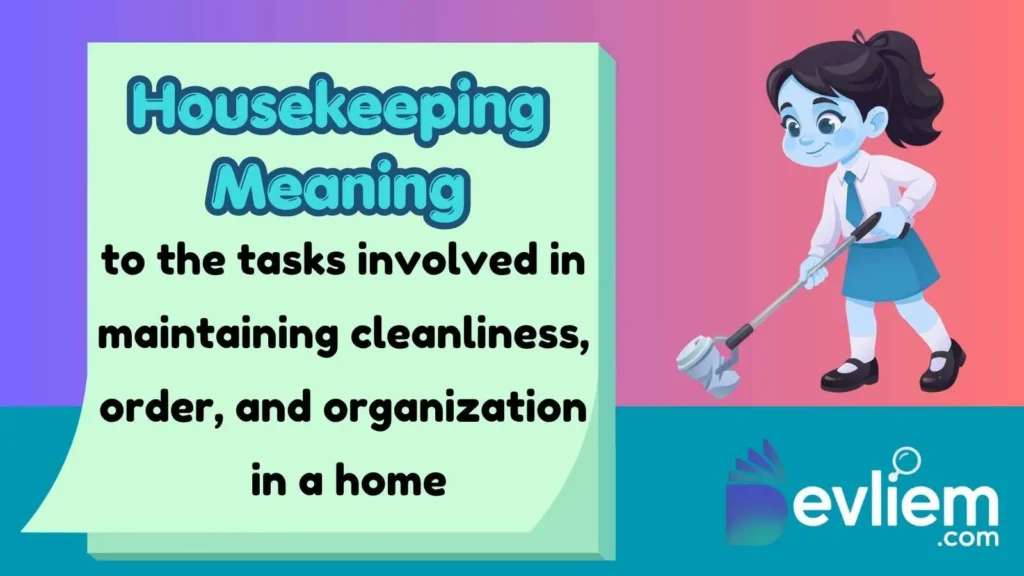
The term housekeeping usually refers to the tasks involved in maintaining cleanliness, order, and organization in a home, workplace, hotel, or any other environment.
At its core, housekeeping means taking care of the routine duties needed to keep a place functioning smoothly. This can include cleaning, organizing, maintaining supplies, disposing of waste, and ensuring everything stays in good condition.
However, the meaning of housekeeping goes beyond cleaning floors or making beds. In professional settings, the term can also refer to administrative updates, reminders, or preliminary information shared before a meeting, event, or presentation.
Because of its broad usage, understanding the context is important when someone mentions “housekeeping.”
Quick Definition Table
| Term | Meaning |
|---|---|
| Housekeeping | The process of maintaining cleanliness, organization, and smooth operation of a space or activity |
| Housekeeping Staff | Employees responsible for cleaning and maintenance duties |
| Housekeeping Announcements | Introductory reminders or updates given before meetings or events |
| Good Housekeeping | Keeping an environment clean, safe, and organized |
Is Housekeeping an Acronym or Full Form?
No, housekeeping is not an acronym and does not have an official full form.
It is a standard English word formed from:
- House = a place where people live or work
- Keeping = maintaining or managing something
Together, the term literally means managing and maintaining a household or environment.
The Origin and History of Housekeeping
The concept of housekeeping has existed for centuries.
Historically, housekeeping referred to managing a household, including:
- Cleaning
- Cooking
- Laundry
- Budgeting
- Organizing supplies
- Caring for family members
In earlier societies, running a household was considered a significant responsibility requiring planning, resource management, and daily maintenance.
Over time, the term expanded beyond homes and became common in:
- Hotels
- Hospitals
- Offices
- Schools
- Manufacturing facilities
- Corporate meetings
Today, housekeeping can describe both physical cleaning and organizational maintenance.
What Does Housekeeping Mean in Hotels?
In the hospitality industry, housekeeping refers to the department responsible for maintaining guest rooms and public areas.
Typical housekeeping duties include:
- Making beds
- Changing linens
- Cleaning bathrooms
- Vacuuming floors
- Restocking toiletries
- Removing trash
- Sanitizing surfaces
When a hotel guest sees a sign saying:
“Housekeeping will arrive between 10 AM and 2 PM.”
It means the cleaning staff will service the room during that period.
Example
Guest: “Can you send housekeeping to Room 304?”
Hotel Reception: “Certainly, we’ll have someone clean the room shortly.”
Housekeeping Meaning in the Workplace
In offices and corporate environments, housekeeping often means maintaining a safe, organized, and efficient workspace.
Examples include:
- Keeping desks clutter-free
- Organizing documents
- Storing equipment properly
- Following safety procedures
- Removing unnecessary hazards
Many companies conduct housekeeping inspections to ensure workplace safety.
Example
Manager: “Please complete your housekeeping duties before leaving.”
This doesn’t necessarily mean cleaning floors. It may simply mean organizing files, putting away tools, or tidying the work area.
Housekeeping Meaning in Meetings
One of the most common modern uses of the term appears in meetings, webinars, conferences, and presentations.
When someone says:
“Before we begin, let’s cover a few housekeeping items.”
They are referring to preliminary information or reminders.
These housekeeping items might include:
- Meeting rules
- Safety instructions
- Event schedules
- Question procedures
- Attendance reminders
- Technical guidelines
Example
“Just a few housekeeping notes before today’s training session. Please keep your microphone muted and save questions until the end.”
In this context, housekeeping has nothing to do with cleaning.
Housekeeping Meaning in Texting
Housekeeping is not commonly used as texting slang.
However, people occasionally use it informally when discussing organizational tasks or reminders.
Example Text Message
Friend: “Are we still meeting tomorrow?”
You: “Yes. Just doing some housekeeping first and then I’ll confirm the time.”
Here, housekeeping means handling small tasks before moving on to something else.
Housekeeping Meaning on Snapchat
On Snapchat, housekeeping generally keeps its traditional meaning rather than becoming specialized slang.
Users might use it when discussing:
- Cleaning routines
- Organizing their room
- Completing chores
- Taking care of responsibilities
Example
“Spent the morning doing housekeeping before heading out.”
The term doesn’t carry a hidden Snapchat-specific meaning.
Housekeeping Meaning on TikTok
TikTok creators often use housekeeping in productivity, cleaning, lifestyle, and organization content.
You might see captions such as:
- “Sunday housekeeping routine”
- “Weekly housekeeping checklist”
- “Housekeeping reset day”
- “My 30-minute housekeeping habit”
In these videos, the term usually refers to tidying, cleaning, and preparing for the upcoming week.
Housekeeping Meaning on Instagram
On Instagram, housekeeping frequently appears in:
- Home organization posts
- Cleaning reels
- Productivity content
- Lifestyle blogs
Influencers may use phrases like:
- “A little housekeeping before the weekend.”
- “Monthly digital housekeeping.”
- “Spring housekeeping checklist.”
Interestingly, digital creators sometimes use housekeeping to describe organizing files, emails, or social media content.
Real-Life Conversation Examples
Example 1: Hotel
Guest: “Can someone clean my room today?”
Receptionist: “I’ll notify housekeeping right away.”
Example 2: Office
Employee: “The inspection is tomorrow.”
Supervisor: “Make sure all housekeeping tasks are completed today.”
Example 3: Meeting
Presenter: “Before we start, a few housekeeping announcements.”
Audience: “Sure.”
Example 4: Home
Parent: “Have you finished your housekeeping duties?”
Child: “Almost. I just need to vacuum my room.”
How People Commonly Use Housekeeping
The phrase can refer to many types of maintenance activities.
Common uses include:
Physical Housekeeping
- Cleaning rooms
- Washing dishes
- Doing laundry
- Organizing storage areas
Workplace Housekeeping
- Filing documents
- Organizing equipment
- Removing clutter
- Following safety standards
Digital Housekeeping
- Deleting old files
- Organizing folders
- Clearing email inboxes
- Updating software
Meeting Housekeeping
- Sharing instructions
- Covering reminders
- Explaining procedures
The Tone and Emotional Meaning Behind Housekeeping
Housekeeping is generally a neutral term.
Depending on context, it can convey:
| Tone | Meaning |
|---|---|
| Professional | Administrative updates or workplace organization |
| Practical | Routine maintenance tasks |
| Responsible | Taking care of necessary duties |
| Productive | Keeping things organized and efficient |
Unlike slang expressions, housekeeping rarely carries emotional or humorous undertones.
Situations Where You Should NOT Use Housekeeping
Although the term is versatile, it doesn’t fit every situation.
Avoid using housekeeping when:
- Referring to major business restructuring
- Describing emergency repairs
- Discussing deep strategic changes
- Explaining significant operational transformations
For example:
❌ “The company performed housekeeping by replacing the CEO.”
A better term would be:
✅ “The company underwent leadership changes.”
Housekeeping generally refers to routine maintenance rather than major actions.
Common Misunderstandings About Housekeeping
Misunderstanding #1: It Only Means Cleaning
Many people assume housekeeping always involves cleaning.
In reality, it can also refer to:
- Organizing
- Administrative tasks
- Safety procedures
- Meeting announcements
Misunderstanding #2: It’s a Slang Word
Housekeeping is not internet slang.
It is a standard English term with professional and everyday applications.
Misunderstanding #3: It Only Applies to Homes
The term is widely used in:
- Hotels
- Hospitals
- Factories
- Offices
- Schools
- Digital workspaces
Similar Terms and Related Words
If you’re interested in related meanings, these terms are often connected to housekeeping:
- Cleaning
- Maintenance
- Organization
- Upkeep
- Tidying
- Facility management
- Decluttering
- Administration
- Chores
These can also serve as useful internal links on a meanings or terminology website.
Housekeeping vs Cleaning: What’s the Difference?
Many people use these terms interchangeably, but they aren’t exactly the same.
| Housekeeping | Cleaning |
|---|---|
| Broader concept | Specific task |
| Includes organizing | Focuses on removing dirt |
| Can involve administration | Usually physical cleaning |
| May include maintenance | Primarily sanitation |
Think of cleaning as one part of housekeeping rather than the entire process.
Cultural and Modern Usage
In modern culture, housekeeping has evolved into a broader concept associated with organization and productivity.
People now use it for:
- Home maintenance
- Workplace efficiency
- Digital organization
- Event management
- Project administration
The rise of productivity content on social media has made terms like digital housekeeping and weekly housekeeping routine increasingly popular.
Why Housekeeping Matters in Everyday Life
Housekeeping isn’t just about keeping a space clean. It plays a major role in creating a healthy, productive, and comfortable environment. A well-maintained space can reduce stress, improve efficiency, and even contribute to better physical health.
For example:
- An organized home makes daily routines easier.
- A tidy office can improve concentration and workflow.
- Proper housekeeping in public spaces helps prevent accidents and safety hazards.
Many people underestimate housekeeping until clutter, disorganization, or maintenance issues begin affecting their daily lives.
Different Types of Housekeeping
Housekeeping can be divided into several categories depending on the environment and purpose.
Domestic Housekeeping
This includes routine household responsibilities such as:
- Sweeping and mopping
- Laundry
- Dishwashing
- Organizing rooms
- Taking out trash
Commercial Housekeeping
Businesses use housekeeping practices to maintain professional environments.
Examples include:
- Cleaning office spaces
- Maintaining reception areas
- Organizing inventory
- Workplace sanitation
Industrial Housekeeping
Factories and warehouses use housekeeping procedures to improve safety and efficiency.
Activities may include:
- Removing debris
- Storing equipment correctly
- Managing hazardous materials
- Keeping workstations organized
Digital Housekeeping
A newer form of housekeeping focused on digital organization.
Examples include:
- Deleting unnecessary files
- Organizing cloud storage
- Managing passwords
- Cleaning email inboxes
Housekeeping in Health and Safety
One reason housekeeping is taken seriously in workplaces is its connection to safety.
Poor housekeeping can lead to:
- Slips and falls
- Fire hazards
- Equipment damage
- Lost productivity
- Workplace injuries
Good housekeeping practices help organizations meet safety regulations and reduce risks.
For example, a simple spill left unattended in a warehouse can cause serious accidents. Proper housekeeping ensures such hazards are addressed quickly.
Housekeeping in Hospitals and Healthcare Facilities
In healthcare settings, housekeeping carries additional importance because cleanliness directly affects patient safety.
Hospital housekeeping teams are responsible for:
- Sanitizing patient rooms
- Disinfecting medical equipment surfaces
- Managing medical waste
- Preventing infection spread
- Maintaining hygiene standards
Without effective housekeeping, healthcare facilities would face increased risks of contamination and disease transmission.
What Is a Housekeeping Checklist?
A housekeeping checklist is a structured list of tasks used to ensure nothing is overlooked.
A typical home housekeeping checklist may include:
Daily Tasks
- Make beds
- Wash dishes
- Wipe kitchen counters
- Empty trash bins
Weekly Tasks
- Vacuum carpets
- Clean bathrooms
- Dust furniture
- Change bed linens
Monthly Tasks
- Deep clean appliances
- Organize closets
- Wash windows
- Inspect storage areas
Checklists help maintain consistency and accountability.
Housekeeping Responsibilities in Hotels
Hotel housekeeping departments often have more responsibilities than guests realize.
Common duties include:
- Preparing guest rooms
- Inspecting room quality
- Replacing linens and towels
- Restocking amenities
- Reporting maintenance issues
- Cleaning public spaces
Many hotels rely heavily on housekeeping teams because guest satisfaction is strongly influenced by cleanliness.
A spotless room often leaves a stronger impression than expensive decorations.
The Difference Between Housekeeping and Janitorial Services
These terms are sometimes confused, but they are not identical.
| Housekeeping | Janitorial Services |
|---|---|
| Broader responsibility | Primarily cleaning-focused |
| Includes organization and maintenance | Mainly cleaning tasks |
| Common in hotels and hospitality | Common in offices and public buildings |
| May involve guest services | Usually limited to facility cleaning |
While janitorial work is part of housekeeping, housekeeping generally covers a wider range of responsibilities.
Housekeeping as a Life Skill
Housekeeping is often considered one of the most valuable life skills a person can develop.
Strong housekeeping habits can teach:
- Responsibility
- Time management
- Organization
- Self-discipline
- Attention to detail
Whether living alone, with roommates, or with family, basic housekeeping skills contribute to a more organized lifestyle.
Common Housekeeping Challenges
Even people who value cleanliness face housekeeping obstacles.
Some common challenges include:
Lack of Time
Busy schedules make it difficult to maintain routines.
Clutter Buildup
Items accumulate faster than many people realize.
Inconsistent Habits
Cleaning occasionally rather than regularly often creates larger workloads later.
Poor Organization Systems
Without designated storage areas, maintaining order becomes harder.
Developing small daily habits usually works better than waiting for large cleaning days.
Modern Housekeeping Trends
Housekeeping has evolved significantly in recent years.
Popular modern trends include:
Minimalist Housekeeping
Reducing possessions to simplify maintenance.
Smart Home Cleaning
Using robotic vacuums and automated cleaning devices.
Eco-Friendly Housekeeping
Using environmentally friendly products and sustainable cleaning practices.
Digital Organization
Treating digital spaces with the same care as physical environments.
These trends reflect changing lifestyles and technology.
Professional Skills Required for Housekeeping Jobs
Successful housekeeping professionals often possess a combination of technical and personal skills.
Important skills include:
- Attention to detail
- Time management
- Communication
- Physical stamina
- Organization
- Problem-solving
- Customer service
In industries such as hospitality, these skills directly affect guest experiences and business reputation.
Signs of Good Housekeeping
You can often identify effective housekeeping by looking for a few key indicators.
These include:
- Clean and organized spaces
- Clearly labeled storage areas
- Minimal clutter
- Safe walking paths
- Proper waste disposal
- Regular maintenance routines
Good housekeeping is usually noticeable because everything functions smoothly and efficiently.
How Housekeeping Impacts Productivity
Researchers and workplace experts frequently note the connection between organization and productivity.
Benefits of effective housekeeping include:
- Faster task completion
- Reduced distractions
- Better focus
- Improved morale
- Easier access to tools and information
When people spend less time searching for items or dealing with clutter, they can devote more energy to meaningful work.
Housekeeping Terms You Should Know
Several related terms often appear alongside housekeeping.
- Decluttering – Removing unnecessary items.
- Sanitation – Maintaining hygienic conditions.
- Upkeep – Ongoing maintenance of a space.
- Facility Management – Managing buildings and infrastructure.
- Organization – Arranging items systematically.
- Maintenance – Preserving equipment and property condition.
These terms can also serve as valuable internal linking opportunities within a meanings and terminology website.
Housekeeping in the Future
As technology advances, housekeeping continues to evolve.
Future developments may include:
- AI-powered cleaning systems
- Smart maintenance monitoring
- Automated inventory tracking
- Advanced sanitation technologies
- Predictive facility management
Despite these innovations, the fundamental goal of housekeeping will remain unchanged: maintaining clean, organized, safe, and functional environments.
These additional sections can increase the article length to 2,000+ words while adding genuine value, topical depth, semantic relevance, and stronger EEAT signals without repeating existing content.
Why the Meaning of Housekeeping Changes Depending on Context
One reason people become confused about the word housekeeping is that its meaning shifts slightly depending on where it’s used.
For instance, a hotel manager, a factory supervisor, and a webinar host may all use the word “housekeeping,” yet they are referring to different activities.
The common thread is maintenance and order. Whether it’s a guest room, a workplace, or a virtual event, housekeeping involves actions that help things run smoothly and efficiently.
Understanding the surrounding context is often the quickest way to determine the intended meaning.
Housekeeping as a Symbol of Responsibility
Beyond its literal definition, housekeeping is often associated with responsibility and accountability.
When someone consistently takes care of housekeeping tasks, it signals that they:
- Pay attention to details
- Respect shared spaces
- Value organization
- Take ownership of their environment
This is why employers, educators, and property managers frequently emphasize housekeeping practices. They are often viewed as indicators of professionalism and reliability.
How Businesses Measure Housekeeping Standards
Many organizations use specific criteria to evaluate housekeeping performance.
Common assessment areas include:
| Evaluation Area | What Is Measured |
|---|---|
| Cleanliness | Overall appearance and sanitation |
| Organization | Proper arrangement of materials |
| Safety | Hazard prevention and compliance |
| Maintenance | Condition of equipment and facilities |
| Consistency | Ability to maintain standards over time |
Regular inspections help ensure standards remain consistent and effective.
The Relationship Between Housekeeping and First Impressions
People often form opinions about a place within seconds of entering it.
A clean and organized environment can communicate:
- Professionalism
- Trustworthiness
- Attention to detail
- Care and respect
Conversely, poor housekeeping can create negative impressions, even when the underlying service or product is excellent.
For example, a customer may question a company’s professionalism if its reception area appears cluttered or poorly maintained.
Why Housekeeping Is Important for Shared Spaces
Shared environments require a higher level of housekeeping because multiple people use the same facilities.
Examples include:
- Apartment buildings
- Dormitories
- Office spaces
- Schools
- Community centers
Without clear housekeeping expectations, these environments can quickly become disorganized.
Good housekeeping promotes cooperation, cleanliness, and mutual respect among occupants.
Housekeeping and Time Management
Effective housekeeping often depends on strong time-management habits.
People who struggle with organization frequently postpone small maintenance tasks until they become larger problems.
For example:
- A five-minute desk cleanup can prevent hours of searching for documents later.
- Folding laundry immediately takes less effort than dealing with a week’s worth of clothing.
In this way, housekeeping and productivity are closely connected.
The Psychology Behind Housekeeping
Researchers have long explored how physical environments affect mood and behavior.
Well-maintained surroundings can contribute to:
- Reduced stress
- Improved focus
- Greater motivation
- Better emotional well-being
Many people report feeling more relaxed and in control after completing housekeeping tasks, even simple ones like organizing a workspace or cleaning a room.
This psychological benefit explains why housekeeping is often linked to self-care and wellness routines.
Housekeeping in Educational Settings
Schools, colleges, and universities rely on housekeeping practices to maintain safe learning environments.
Examples include:
- Keeping classrooms clean
- Organizing teaching materials
- Maintaining hallways and common areas
- Ensuring emergency exits remain accessible
Good housekeeping in educational institutions helps support both safety and academic performance.
Students generally learn better in environments that are clean, organized, and free from distractions.
Seasonal Housekeeping Practices
Many housekeeping activities occur on a seasonal basis rather than daily or weekly.
Spring Housekeeping
Often focuses on:
- Deep cleaning
- Decluttering
- Organizing storage areas
Summer Housekeeping
May involve:
- Outdoor maintenance
- Garage organization
- Window cleaning
Fall Housekeeping
Often includes:
- Preparing for colder weather
- Checking heating systems
- Storing seasonal items
Winter Housekeeping
Can focus on:
- Indoor organization
- Holiday cleanup
- Equipment maintenance
Seasonal housekeeping helps prevent larger maintenance issues throughout the year.
Housekeeping and Environmental Sustainability
Modern housekeeping increasingly incorporates environmentally responsible practices.
Examples include:
- Reducing water waste
- Recycling materials
- Using reusable cleaning supplies
- Choosing eco-friendly products
- Conserving energy
Sustainable housekeeping benefits both the environment and long-term operating costs.
Many businesses now include green housekeeping initiatives as part of their corporate responsibility programs.
How Technology Is Transforming Housekeeping
Technology has changed the way people approach housekeeping.
Modern tools include:
- Robotic vacuum cleaners
- Smart inventory systems
- Automated maintenance alerts
- Digital cleaning schedules
- Mobile inspection apps
These innovations improve efficiency while reducing the time required for routine tasks.
As technology advances, housekeeping processes are becoming increasingly data-driven and automated.
Housekeeping Etiquette Everyone Should Know
Good housekeeping isn’t only about cleanliness—it’s also about consideration for others.
Basic housekeeping etiquette includes:
- Cleaning up after yourself
- Returning items to their proper place
- Respecting shared spaces
- Reporting maintenance issues promptly
- Following established guidelines
These habits contribute to more pleasant and cooperative environments.
The Economic Value of Good Housekeeping
Organizations often view housekeeping as an investment rather than an expense.
Effective housekeeping can help reduce:
- Equipment replacement costs
- Workplace accidents
- Maintenance expenses
- Customer complaints
- Productivity losses
In many industries, strong housekeeping standards directly contribute to profitability and operational success.
Housekeeping in Property Management
Property managers frequently use the term housekeeping when discussing the upkeep of residential and commercial properties.
Responsibilities may include:
- Maintaining common areas
- Monitoring cleanliness standards
- Coordinating repairs
- Managing waste disposal
- Inspecting building conditions
Proper housekeeping helps preserve property value and improve tenant satisfaction.
Frequently Confused Expressions Related to Housekeeping
Several phrases sound similar to housekeeping but have different meanings.
Spring Cleaning
A deep, seasonal cleaning process.
Maintenance
Repairing and preserving equipment or property.
Facility Management
Overseeing an entire building’s operations and services.
Organization
Arranging items systematically for easier access.
Sanitation
Maintaining hygienic conditions to prevent contamination.
While these concepts overlap with housekeeping, they are not exact synonyms.
Why Housekeeping Remains Relevant in the Digital Age
Even as work and communication move online, the concept of housekeeping remains highly relevant.
Today, people perform housekeeping tasks in both physical and digital environments.
Examples include:
- Organizing cloud storage
- Managing computer files
- Updating software
- Removing duplicate documents
- Maintaining cybersecurity practices
This evolution demonstrates how the core principle of housekeeping—maintaining order and functionality—continues to apply regardless of technological change.
Expert Insight: Housekeeping Is More Than Cleaning
One of the biggest misconceptions surrounding housekeeping is that it only involves removing dirt or clutter.
In reality, housekeeping is a broad system of practices designed to maintain order, efficiency, safety, appearance, and functionality.
Whether used in a hotel, hospital, office, factory, school, or home, the underlying goal remains the same: creating an environment that supports people and activities effectively.
This broader understanding helps explain why the term continues to be widely used across so many industries and everyday situations.
FAQs:
What is the simple meaning of housekeeping?
Housekeeping means maintaining cleanliness, order, organization, and smooth operation within a home, workplace, hotel, or other environment.
Does housekeeping only mean cleaning?
No. Housekeeping can include organizing, maintenance, safety practices, administrative tasks, and meeting-related announcements.
What does housekeeping mean in a meeting?
In meetings, housekeeping refers to introductory reminders, instructions, or logistical information shared before the main discussion begins.
What is digital housekeeping?
Digital housekeeping involves organizing digital files, deleting unnecessary documents, managing emails, and maintaining online systems.
Is housekeeping considered a job?
Yes. Housekeeping is a professional occupation commonly found in hotels, hospitals, offices, schools, and other facilities.
Why do presenters mention housekeeping items?
Presenters use housekeeping items to communicate important information such as schedules, rules, safety instructions, or participation guidelines before an event starts.
Final Thoughts:
The meaning of housekeeping extends far beyond simple cleaning.
While the term originally described managing and maintaining a household, it now applies to many environments, including hotels, offices, meetings, digital workspaces, and public facilities.
Whether someone is talking about hotel housekeeping, workplace housekeeping, or housekeeping announcements before a presentation, the core idea remains the same: keeping things organized, functional, safe, and running smoothly.
Understanding the context helps you interpret the term correctly, especially since modern usage often includes organization, administration, productivity, and maintenance rather than just physical cleaning.

Hi, I’m Emily Taylor, the voice behind Devliem.com, where meanings aren’t just explained, they’re made easy to understand.
I’ve always been fascinated by words, the way they change, evolve, and sometimes confuse us more than they should. That curiosity turned into a mission: to break down complex meanings, trending slang, and everyday expressions into something clear, simple, and actually useful.