You’ve probably heard “And I don’t want the world to see me at least once in your life. Maybe during a heartbreak playlist symptom.
Maybe in a late night TikTok edit. Or maybe blasting through car speakers during a dramatic rainy drive.
The iris song meaning has fascinated listeners for decades because it feels painfully personal.
Even if you’ve never experienced the exact situation behind the song, the emotions hit hard. Vulnerability. Fear. Love.
The desperate need to be understood.
Released in 1998 by the Goo Goo Dolls Iris became one of the most iconic emotional rock ballads ever written.
And somehow, nearly 30 years later, people are still searching for what the lyrics truly mean.
This updated 2026 guide breaks down the story behind “Iris,” the hidden symbolism in the lyrics, emotional interpretations, fan theories, and why the song continues to dominate playlists, movies, and social media edits today.
What Does “Iris” Mean?
Quick Answer:
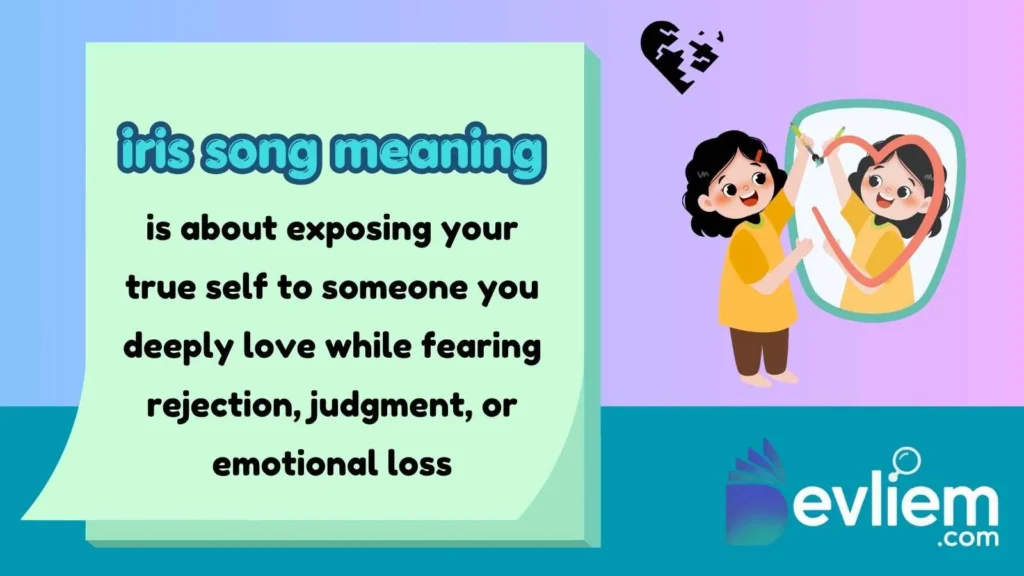
The Iris song meaning is about exposing your true self to someone you deeply love while fearing rejection, judgment, or emotional loss.
At its core, “Iris” is a song about emotional nakedness. The narrator wants connection so badly that he’s willing to risk everything just to feel understood for one moment.
The song was written by John Rzeznik for the soundtrack of City of Angels. In the movie, an angel longs to become human so he can fully experience love and emotion. That theme heavily shaped the lyrics.
Interestingly, the title “Iris” doesn’t appear in the lyrics at all.
According to interviews, Rzeznik found the name by seeing singer Iris DeMent in a magazine and liked how emotional and poetic it sounded.
Pronunciation
“Iris” is pronounced:
Eye-riss
Simple. But emotionally devastating.
The Story Behind the Song
When “Iris” dropped in 1998, alternative rock was everywhere. But this song felt different.
It wasn’t angry It wasn’t flashy It was raw.
The song appeared on the soundtrack for City of Angels, a romantic fantasy drama starring Nicolas Cage and Meg Ryan.
John Rzeznik later explained that he connected deeply with the loneliness of the film’s main character. At the time, he also struggled with fame, identity, and emotional isolation. That personal tension poured directly into the lyrics.
And honestly? You can hear it.
The song doesn’t sound polished emotionally. It sounds exposed.
That’s exactly why people connected with it.
Breaking Down the Lyrics
“And I’d give up forever to touch you…”
This opening line immediately establishes obsession and sacrifice.
The narrator isn’t talking about casual attraction. This is someone willing to abandon eternity just to experience real human connection.
For fans of the movie, it mirrors the angel giving up immortality for love.
For everyone else? It’s heartbreak fuel.
“I just want you to know who I am”
This is arguably the emotional center of the entire song.
The narrator craves genuine understanding. Not surface-level attention. Not admiration. Real emotional recognition.
That line resonates especially with:
- People struggling with identity
- Anyone hiding emotions
- People afraid of vulnerability
- Listeners dealing with loneliness
It’s one of those lyrics that somehow feels universal and deeply personal at the same time.
“And I don’t want the world to see me…”
This lyric often gets interpreted as insecurity or fear of judgment.
The narrator believes the world would misunderstand him if they saw his true self. But he still wants one person to see and accept him completely.
That contrast is what makes the song emotionally powerful.
Emotional Themes and Symbolism
The iris song meaning goes beyond romance. The lyrics touch several emotional themes that keep the song timeless.
Vulnerability
The entire song revolves around emotional exposure.
The narrator removes emotional armor and risks rejection because authentic connection matters more than safety.
That hits especially hard in today’s social-media-heavy world where people constantly curate polished versions of themselves.
Identity
“I just want you to know who I am” sounds simple, but it carries a massive emotional weight.
The song asks:
- Can anyone truly know us?
- Do we even show our real selves?
- What happens when someone finally sees through the mask?
That identity struggle is a huge reason Gen Z listeners continue rediscovering the song.
Isolation
Despite being a love song, “Iris” feels lonely.
The narrator sounds emotionally separated from the rest of the world. The loved person becomes the only source of emotional grounding.
That loneliness gives the song its haunting atmosphere.
Mortality and Sacrifice
Because the song was tied to City of Angels, themes of mortality matter too.
The narrator is willing to lose eternity, safety, and certainty for one meaningful human experience.
Heavy stuff for a radio hit.
Why Iris Became So Popular
Some songs become hits.
“Iris” became emotional shorthand.
People use it for:
- Breakup edits
- Wedding dances
- Sad TikTok montages
- Nostalgia playlists
- Emotional movie scenes
- Karaoke moments that accidentally become therapy
The song also crossed generations unusually well.
Why Millennials Loved It
It defined late-90s emotional rock.
Why Gen Z Rediscovered It
The lyrics feel authentic in an era obsessed with curated online identities.
Why It Still Trends
Because emotional honesty never really goes out of style.
Real-Life Interpretations From Fans
Between Friends
Friend 1: “You okay?”
Friend 2: “Bro, I listened to Iris three times today.”
Friend 1: “Ah. So absolutely not.”
Meaning: The song has become internet shorthand for emotional devastation.
In Dating Culture
Text: “If he posts Iris lyrics at 2 AM, leave him alone. He’s fighting demons.”
Meaning: Online culture often jokes that “Iris” signals emotional vulnerability or heartbreak.
On TikTok
Users frequently pair “Iris” with:
- nostalgic childhood edits
- relationship memories
- emotionally intense movie clips
- late-night confession videos
The song amplifies emotional storytelling almost instantly.
In Gaming Communities
Oddly enough, “Iris” appears in emotional gaming edits too.
Especially:
- character death compilations
- story-driven RPG endings
- friendship montages in multiplayer games
The emotional tone fits perfectly.
Family Context
Parent: “Why is this old song trending again?”
Teen: “Because it slaps emotionally.”
Meaning: Cross-generational emotional appeal keeps the song culturally alive.
Common Mistakes & Misunderstandings
Mistake #1: Thinking It’s Just a Basic Love Song
It’s deeper than that.
The song explores identity, fear, shame, and emotional exposure — not just romance.
Mistake #2: Assuming Iris Is a Person in the Lyrics
The name “Iris” never appears in the song itself.
Many listeners assume the narrator sings directly to someone named Iris, but the title was chosen separately.
Mistake #3: Misreading the Song as Depressing Only
Yes, the song feels sad.
But it’s also hopeful.
The narrator believes meaningful connection is worth emotional risk. That’s actually pretty optimistic underneath all the emotional damage.
Iris Across Different Platforms & Demographics
Gen Z Usage
Gen Z often uses “Iris” ironically and sincerely at the same time.
Typical examples:
- “This song ruins me emotionally.”
- “Late-night Iris hits different.”
- “Main-character energy.”
TikTok especially revived the song through emotional edits.
Millennials
For Millennials, “Iris” is deeply nostalgic.
It reminds many listeners of:
- high school romance
- burned CDs
- movie soundtracks
- emotional rock radio
Basically, peak late-90s feelings.
Older Generations
Older audiences often appreciate the songwriting craftsmanship more than the meme culture around it.
And honestly? Fair.
The lyrics genuinely hold up.
Is Iris Safe for Work?
Yes.
The song is emotionally intense but completely safe for:
- workplaces
- school discussions
- family listening
- public playlists
Unless your coworkers catch you crying at your desk.
Related Slang, Songs & Emotional Alternatives
| Term/Song | Meaning |
|---|---|
| Fix You | Emotional healing anthem |
| Chasing Cars | Intimate love and vulnerability |
| The Scientist | Regret and emotional reflection |
| Creep | Alienation and insecurity |
| Somewhere Only We Know | Nostalgia and emotional escape |
| “Sadboy hours” | Internet slang for emotional late-night feelings |
| “In my feels” | Being emotionally overwhelmed |
| “Main character energy” | Feeling cinematic or emotionally dramatic |
| “Soft hours” | Vulnerable emotional mood online |
| “Emotional damage playlist” | Meme term for heartbreak music |
Suggested Internal Reads
- Learn more about “sadboy hours”
- Explore emotional rock songs from the 90s
- Best breakup songs that still hold up
- Why nostalgic music hits harder emotionally
FAQs:
What is the true meaning of Iris by the Goo Goo Dolls?
The song is about vulnerability, emotional exposure, and wanting genuine human connection. The narrator fears being misunderstood by the world but desperately wants one person to truly see him.
Is Iris based on a true story?
Not exactly. It was inspired by themes from City of Angels, but songwriter John Rzeznik also drew from his own feelings of isolation and emotional struggle.
Why is Iris so emotional?
The lyrics combine fear, longing, loneliness, and hope in an unusually honest way. The stripped-down emotional writing makes listeners feel personally connected to the song.
What genre is Iris?
“Iris” blends alternative rock, soft rock, and emotional ballad elements. It became one of the defining rock ballads of the late 1990s.
Why did Iris go viral again?
TikTok, nostalgia culture, emotional edits, and younger listeners rediscovering 90s music helped the song trend again in the 2020s and beyond.
Conclusion:
The iris song meaning endures because it captures something people rarely say out loud: we all want to be truly understood.
That’s the heart of the song. Not perfection. Not romance alone. Connection.
Nearly three decades later Iris still feels intensely human. Whether you discovered it through old-school radio, a breakup playlist, or a TikTok edit at 1 AM, the emotional core still lands exactly the same.
And honestly? That’s what makes great music timeless.
Drop your favorite emotional lyric in the comments below or explore more iconic song meanings and internet culture guides next.

Hi, I’m Emily Taylor, the voice behind Devliem.com, where meanings aren’t just explained, they’re made easy to understand.
I’ve always been fascinated by words, the way they change, evolve, and sometimes confuse us more than they should. That curiosity turned into a mission: to break down complex meanings, trending slang, and everyday expressions into something clear, simple, and actually useful.