You’ve seen it a thousand times. A quick text saying ‘Sounds good :)’ or ‘Thanks’, and somehow that tiny symbol changes the whole mood of the message.
That’s the power of 🙂 meaning in digital communication. Two simple keyboard characters can make a sentence feel warmer, friendlier, and less cold.
In a world where tone is easy to misread through screens, little symbols matter more than ever.
Even with modern emojis everywhere, the classic smiley face still survives in texts, emails, gaming chats, and social media.
Why? Because it feels simple, human, and a little nostalgic.
In this updated 2026 guide, you’ll learn exactly what 🙂 means, when to use it, when to avoid it, how different generations interpret it, and real examples so you never misread it again.
What Does “:) “Mean?
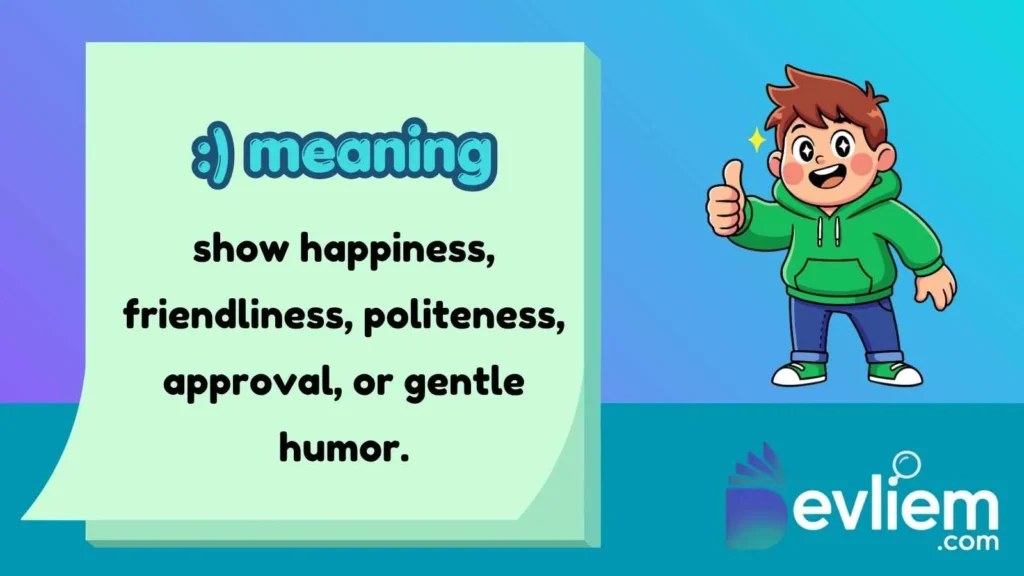
🙂is a text emoticon used to show happiness, friendliness, politeness, approval, or gentle humour.
It combines:
- : eyes
- ) = smiling mouth
Together, they form a sideways smiling face.
Quick Answer: The 🙂 meaning is usually “I’m happy,” “I’m being nice,” “just kidding,” or “friendly tone.”
Origin of 🙂
The smiley emoticon became popular in the early internet era, especially in email forums and chat rooms during the 1980s and 1990s. Before graphic emojis existed, people used keyboard symbols to express emotion.
It later spread to:
- MSN Messenger
- AOL Instant Messenger
- SMS texting
- Facebook chat
- Reddit and forums
How Meaning Evolved
Originally, it 🙂 simply meant happiness. Today it can also mean:
- Softening a message
- Being polite
- Mild flirting
- Sarcasm (rarely)
- Warm professionalism
Pronunciation
People usually say:
- “Smiley face”
- “Smiley”
- “Happy face”
How to Use “:) “Correctly in Texts & Chat
Best Contexts for 🙂
Use 🙂 when you want to sound:
- Friendly
- Warm
- Appreciative
- Casual
- Reassuring
Examples:
- Thanks for helping 🙂
- See you later 🙂
- No worries 🙂
Platform-Specific Usage
SMS/Texting: Common for softening short messages.
WhatsApp: Friendly and conversational.
Instagram DMs: Casual, light, slightly playful.
X / Twitter: Less common than emoji but still used.
Discord: Often ironic, nostalgic, or genuine.
Reddit: Sometimes used sincerely, sometimes humorously.
When NOT to Use It
Avoid 🙂 in:
- Serious condolences
- Legal/business complaints
- Formal academic writing
- Sensitive conflict conversations
Bad example:
- We need to discuss your termination 🙂
Yeah… don’t do that.
Formatting Tips
- Lowercase symbols are normal: 🙂
- No need to overuse: 🙂 🙂 🙂 can feel awkward
- Pair with emojis carefully
- Best after short friendly statements
Real Conversation Examples Using “:) “
Between Friends
Alex: Pizza tonight?
Sam: Absolutely 🙂
Meaning: Friendly enthusiasm.
Dating / Flirty Chat
Taylor: You looked cute today 🙂
Meaning: Warm compliment with soft flirt energy.
Family Chat
Mom: Drive safe 🙂
Meaning: Care and affection.
Work Chat
Coworker: I sent the file over 🙂
Meaning: Polite and approachable.
Gaming Chat
Player1: Nice clutch round 🙂
Meaning: Friendly praise and good sportsmanship.
Common Mistakes & Misunderstandings
1. Assuming It Always Means Happiness
Sometimes it 🙂 simply softens the tone. It may not mean the sender is thrilled.
Example:
- Sure, I can do that 🙂
This could just mean politeness.
2. Thinking It’s Flirty Every Time
Not always. Many people use 🙂 nature with everyone.
3. Reading It as Passive-Aggressive
Short replies can feel strange.
Example:
- Okay 🙂
Depending on context, that might sound annoyed or perfectly normal.
Generational Differences
Gen Z: May prefer emojis like 😊 or 😭 instead.
Millennials often love it 🙂 because it feels classic.
Older users: May use it sincerely and frequently.
How to Clarify
If confused, focus on the full sentence, timing, and relationship—not just the smiley.
“:)” Across Different Platforms & Demographics
Gen Z Usage
Younger users often use emojis or meme reactions more than emoticons. But 🙂 still appears ironically or sweetly.
Millennials
Peak 🙂 generation. Many still use it daily in texts and work chats.
Older Generations
Often used sincerely to signal kindness.
Where You’ll See It Most
- Email replies
- Workplace chat apps
- Family group chats
- Reddit comments
- Casual texting
Safe for Work?
‘Yes’ 🙂 is informal but usually safe and harmless in professional chats.
Viral Nostalgia Trend
Retro internet culture has revived old-school emoticons like the following:
- 🙂
- 🙁
- 😉
- 😛
Classic internet never really dies.
Related Slang, Abbreviations & Alternatives
| Term | Meaning |
|---|---|
| 🙂 | Friendly smile |
| 😀 | Big happy emoji |
| 😊 | Warm, gentle smile |
| 😉 | Wink / playful |
| 😀 | Big grin |
| 🙁 | Sad face |
| 😛 | Teasing tongue out |
| lol | Laughing out loud |
| haha | Light laughter |
| brb | Be right back |
Learn more about lol meaning, 😉 meaning, and 😀 meaning for related tone cues.
Synonyms in Casual Tone
- happy face
- smile
- warm vibe
- friendly energy
Opposites
- 🙁
- 😐
- 😒
FAQs:
What does 🙂 mean from a girl?
Usually friendliness or warmth. It may also be playful or flirty depending on your relationship and the conversation.
What does 🙂 mean from a guy?
Same general meaning: friendliness, positivity, or light teasing. Context matters more than gender.
Is 🙂 better than 😊?
Depends on tone. 🙂 feels classic and simple. 😊 feels softer and more expressive.
Why do people still use 🙂 in 2026?
Many people like its simplicity, nostalgia, and quick keyboard convenience.
Can 🙂 be sarcastic?
Yes, but usually only if paired with sharp wording or tense context.
Example: “Sure, whatever :)”
Conclusion:
The classic 🙂 meaning is simple: friendliness, warmth, and positive tone. It helps messages feel human.
Even in 2026, this tiny symbol still works because text can feel cold and 🙂 adds personality instantly.
Next time someone texts you with a smiley face, you’ll know whether it means kindness, humor, flirting, or just good vibes.
Drop your favorite text abbreviation in the comments below!

Hi, I’m Cross Read, the Writer and Creator behind devliem.com, where words stop being confusing and start making sense.
I’ve always been curious about language, how a single word can mean different things depending on context, culture, or even a trend. That curiosity turned into devliem, a space where I break down meanings, decode slang, and simplify the kind of terms people search every day.