Ever watched a movie ending, read a heartfelt message, or seen someone achieve something huge and suddenly your eyes got watery? That feeling is exactly why many people search for tearing-up meaning.
This phrase is common in everyday speech, texting, social media captions, and emotional conversations.
But here’s the twist: ‘tearing up’ can mean two very different things depending on context. It might describe someone becoming emotional and getting misty-eyed, or it could mean literally ripping something apart.
Knowing which meaning is intended helps you avoid awkward misunderstandings. Nobody wants to think someone shredded a notebook when they actually got emotional during a wedding speech.
In this updated 2026 guide, you’ll learn the exact meaning of tearing up, where it came from, how people use it online, real examples, common mistakes, and related phrases people use today.
What Does ‘Tearing Up’ Mean?
Quick Answer
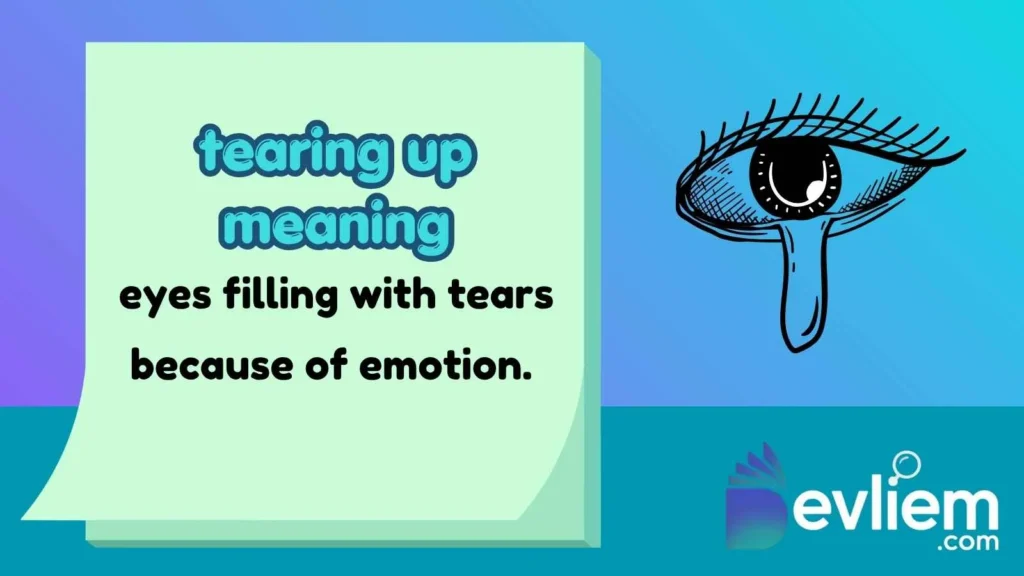
‘Tearing up’ meaning usually refers to eyes filling with tears because of emotion. In other contexts, it means ripping or shredding something physically.
Emotional Meaning
When someone says, “I’m tearing up,” they usually mean they are getting emotional. Their eyes may water because of:
- Sadness
- Happiness
- Pride
- Relief
- Nostalgia
- Gratitude
Example:
“I started tearing up during the graduation speech.”
Literal Meaning
“Tearing up” can also mean damaging something by ripping it.
Example:
“He was angry and started tearing up the letter.”
Origin of the Phrase
The emotional meaning developed naturally from the physical act of tears “welling up” in the eyes. It became especially popular in spoken English and later spread heavily through texting, memes, and reaction culture online.
Pronunciation
Tearing up
(tear rhymes with “fear” in emotional use.)
How to Use “Tearing Up” Correctly in Texts & Chat
The phrase is casual, expressive, and widely understood.
Emotional Use in Chats
Use it when something makes you emotional.
Examples:
- “Stop, I’m tearing up rn.”
- “That video had me tearing up.”
- “Your message made me tear up.”
Tone It Can Convey
- Sweet
- Sentimental
- Proud
- Overwhelmed
- Deeply moved
- Sometimes dramatic for humor
Platform-Specific Usage
SMS / Texting
Short and emotional.
“Bro I’m tearing up. 😭”
Used in family chats or friend groups.
“That baby pic got me tearing up.”
Popular in captions and comments.
“Tearing up at this reunion.”
X / Twitter
Often used for viral moments.
“Why am I tearing up over strangers winning?”
Discord / Gaming
Used jokingly or sincerely.
“This ending got me tearing up, ngl.”
Often appears in storytelling threads.
“I’m not crying, just tearing up.”
When NOT to Use It
Avoid informal emails or professional reports.
Bad example:
“Your quarterly presentation had me tearing up.”
Unless you know the audience well… maybe skip that.
Formatting Tips
- Lowercase feels casual: tearing up
- Caps adds drama: TEARING UP
- Emoji pairings: 😭🥹❤️✨
Real Conversation Examples Using “Tearing Up”
Between Friends
A: Did you see her surprise birthday video?
B: Yeah, I was tearing up by the end.
Meaning: Emotional warmth and affection.
Dating Scenario
A: I reread your message last night.
B: Why?
A: Because it had me tearing up.
Meaning: Deep emotional connection.
Family Chat
Mom: Found your kindergarten photo.
You: Stoppp! I’m tearing up already.
Meaning: Nostalgia and tenderness.
Work Chat
Boss: Congrats on your promotion. You earned it.
Employee: Honestly tearing up right now. Thank you.
Meaning: Pride and gratitude.
Gaming Chat
Player 1: We finally beat the final boss.
Player 2: I’m tearing up. 6 months of pain.
Meaning: Exaggerated humour mixed with relief.
Common Mistakes & Misunderstandings
1. Confusing Emotional vs Physical Meaning
“I was tearing up the note.”
This likely means ripping the note, not crying over it.
Context matters.
2. Assuming It Always Means Sadness
Many people think tears = sadness. Not true.
People tear up from:
- weddings
- reunions
- promotions
- funny laughter
- proud parent moments
3. Generational Misreads
Older users may read it literally first. Younger users usually assume emotional meaning online.
How to Clarify
If unclear, ask:
- “You mean emotional or ripping it?”
- “Like crying tears?”
- “What happened?”
Simple fix.
“Tearing Up” Across Different Platforms & Demographics
Gen Z
Uses it casually and often dramatically.
“That cat video got me tearing up.”
Sometimes sincere. Sometimes meme energy.
Millennials
Use it sincerely for nostalgia, parenting, and life milestones.
“This reunion has me tearing up.”
Older Generations
More likely to use it in spoken conversation than memes or captions.
TikTok & Reels
Very common in emotional reaction comments:
- “Why am I tearing up at this?”
- “Not me tearing up over strangers.”
Is It Formal?
No. It’s informal and conversational.
Safe for Work?
Usually yes, if used appropriately and naturally.
Related Slang, Abbreviations & Alternatives
| Term | Meaning |
|---|---|
| Crying | Full emotional tears |
| Choked up | Unable to speak from emotion |
| Misty-eyed | Eyes watering emotionally |
| Emotional | Feeling strong emotions |
| Soft | Easily touched emotionally |
| I’m in my feels | Deep in emotions |
| Sobbing | Intense crying |
| Weeping | Formal term for crying |
| Bawling | Loud crying |
| Holding back tears | Trying not to cry |
Casual Synonyms
- Getting emotional
- About to cry
- Feeling it
- Waterworks incoming
Opposite Meanings
- Unmoved
- Dry-eyed
- Emotionless
- Fine
FAQs:
What does tearing up mean in texting?
Usually it means someone feels emotional or touched. It can also jokingly mean laughing until tears form.
Does tearing up always mean crying?
No. It often means watery eyes before full crying starts.
Can happy people tear up?
Absolutely. Joy, pride, and gratitude often cause tears.
What does tearing up mean in slang?
It’s often casual shorthand for getting emotional unexpectedly.
Is tearing up positive or negative?
Neither by itself. It depends on the emotion behind it.
Conclusion:
‘Tearing up’ meaning usually describes eyes filling with tears because emotion hits hard. It can come from sadness, happiness, pride, or nostalgia.
It can also literally mean ripping something apart, so context is everything. In conversation, though, the emotional meaning is far more common.
Now when someone says they’re tearing up, you’ll know exactly what they mean. Drop your favourite text abbreviation in the comments below and explore more slang next.

Hi, I’m Emily Taylor, the voice behind Devliem.com, where meanings aren’t just explained, they’re made easy to understand.
I’ve always been fascinated by words, the way they change, evolve, and sometimes confuse us more than they should. That curiosity turned into a mission: to break down complex meanings, trending slang, and everyday expressions into something clear, simple, and actually useful.