If you’ve ever watched a French movie, chatted with a language learning friend, or visited France, chances are you’ve heard the phrase “de rien.”
It pops up everywhere cafés, text messages, TikTok captions, and even gaming chats.
But what exactly does it mean? And why do French speakers use it so often?
Understanding the de rien meaning is more useful than you might think.
In today’s hyper-connected world, small phrases like this show up constantly in social media comments, travel conversations, online dating apps, and language learning content.
One wrong interpretation can make a friendly interaction suddenly awkward.
This updated 2026 guide breaks everything down in plain English. You’ll learn the exact definition, pronunciation, origin, real-life examples, texting etiquette, common mistakes, and how different generations use it online today.
Whether you’re learning French, decoding a message, or just curious about internet culture, this guide has you covered.
What Does “De Rien” Mean?
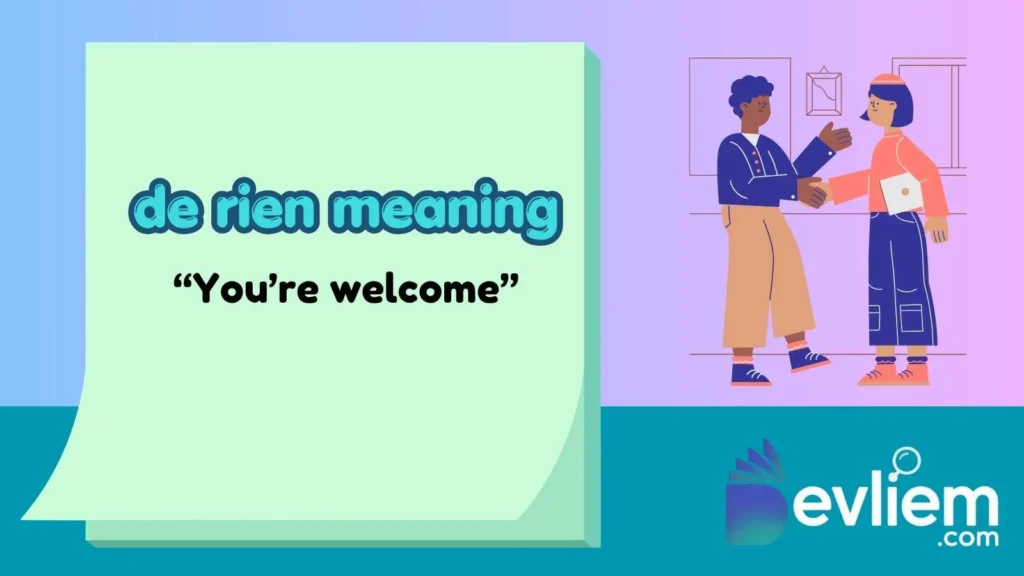
The phrase “de rien” is a French expression that translates to:
- “You’re welcome”
- “It’s nothing”
- “No problem”
People typically say it after someone thanks them.
Quick Answer
“De rien” means “you’re welcome” in French. It’s a casual, polite way to respond when someone says “merci” (thank you).
Origin of the Phrase
“De rien” literally translates to “of nothing” or “it was nothing.” The idea behind the phrase is simple: the favor or help you gave wasn’t a big deal.
The expression has existed in spoken French for generations, but it became especially recognizable worldwide through:
- French education apps
- Tourism
- French cinema and TV
- Social media language trends
- TikTok and meme culture
Today, even non-French speakers casually use “de rien” online to sound playful, cultured, or aesthetic.
Pronunciation Guide
Most English speakers pronounce it roughly like:
duh ree-ahn
Native French pronunciation is softer and more fluid, especially the “r” sound.
How the Meaning Has Evolved
Traditionally, “de rien” was simply polite conversation. But online culture changed things a bit.
Now you’ll also see it used:
- Humorously
- Ironically
- Flirtatiously
- In aesthetic “French-core” content
- As part of multilingual memes
That’s why understanding tone matters just as much as knowing the translation.
How to Use “De Rien” Correctly in Texts & Chat
Using de rien correctly is mostly about context.
In normal conversation, it’s friendly, polite, and relaxed. Think of it as the French equivalent of:
- “No worries”
- “Anytime”
- “Sure thing”
- “Happy to help”
Common Situations Where It Works
You can use “de rien” after:
- Someone thanks you for help
- You answer a question
- You give a compliment-related response
- You do a small favor
Example:
- Person A: “Merci for helping me study!”
- Person B: “De rien 😊”
Simple. Natural. Friendly.
Platform-Specific Usage
SMS & WhatsApp
Usually casual and quick:
- “De rien lol”
- “De rien 😊”
Instagram DMs
Often paired with emojis or playful tone:
- “De rien ✨”
- “De rien haha”
TikTok Comments
People sometimes use it ironically or aesthetically:
- “French people saying de rien after changing my life.”
Discord & Gaming Chats
Short and efficient:
- “de rien bro”
- “dr” (rare shorthand)
Reddit & Forums
Mostly appears in language-learning discussions or travel threads.
When NOT to Use “De Rien”
Avoid using it:
- In highly formal business emails
- During professional presentations
- In legal or official documents
- When speaking to someone expecting formal French etiquette
In formal situations, phrases like:
- “Je vous en prie”
- “Avec plaisir”
may sound more appropriate.
Formatting Tips
Most people write it:
- lowercase: “de rien”
- without punctuation in casual chat
- with emojis in friendly messages
Popular emoji pairings:
- 😊
- ✨
- 🤝
- 😄
Real Conversation Examples Using “De Rien”
Here’s where the phrase becomes crystal clear.
Between Friends
Emma: “Thanks for sending me the notes.”
Lucas: “De rien 😄”
Meaning: Friendly and casual. Lucas is basically saying, “No problem.”
In a Dating Chat
Mia: “Aww thanks for the playlist.”
Noah: “De rien 😉”
Meaning: Slightly flirtatious and playful.
Family Conversation
Mom: “Thanks for helping with dinner.”
Daughter: “De rien!”
Meaning: Warm and polite.
In a Gaming Chat
Player 1: “Thanks for the revive!”
Player 2: “de rien bro”
Meaning: Casual online teamwork language.
Workplace Chat
Coworker: “Appreciate the quick reply.”
You: “De rien.”
Meaning: Friendly, though slightly informal for corporate settings.
Common Mistakes & Misunderstandings
Even though the phrase looks simple, people misuse it all the time.
1. Thinking It Means “Thank You”
This is the biggest mistake.
Remember:
- “Merci” = thank you
- “De rien” = you’re welcome
Mixing them up completely changes the conversation.
2. Using It in Ultra-Formal Situations
Saying “de rien” to a CEO in a formal French business meeting may sound too casual.
French has different politeness levels, similar to:
- “Thanks”
vs. - “I sincerely appreciate it”
Tone matters.
3. Overusing It for Aesthetic Purposes
Some social media users throw random French phrases into captions without understanding them.
Example:
- “de rien vibes only ✨”
Native speakers may find this funny or confusing depending on context.
Generational Misunderstandings
Gen Z
Uses it casually, ironically, or aesthetically online.
Millennials
Usually understand it from school French classes or travel.
Older Generations
May only recognize it from traditional French education.
Cultural Differences
In Canada, France, Belgium, and other French-speaking regions, usage can vary slightly in tone and frequency.
Canadian French speakers may sometimes prefer alternatives depending on the situation.
How to Clarify If Someone Doesn’t Understand
You can simply explain:
“It means ‘you’re welcome’ in French.”
No need for a complicated grammar lesson.
“De Rien” Across Different Platforms & Demographics
The internet gave old phrases new life.
And “de rien” is a perfect example.
Gen Z Usage
Gen Z often uses it:
- ironically
- humorously
- aesthetically
- in multilingual memes
Example TikTok caption:
“Me saying de rien after holding the door once.”
It’s playful and self-aware.
Millennials
Millennials usually use it more traditionally:
- after travel experiences
- in language-learning communities
- in casual multilingual chats
Less irony. More sincerity.
Older Generations
Older users typically encounter “de rien” through:
- school French classes
- travel
- movies
- formal language learning
They’re less likely to use it in memes or online jokes.
Is It Safe for Work?
Generally, yes.
“De rien” is polite and harmless. It’s not offensive slang or inappropriate language.
That said, it still feels conversational rather than highly professional.
Why It Became Popular Online
Several trends boosted its visibility:
- TikTok “French aesthetic” videos
- Travel influencers
- Language-learning apps
- Netflix French shows
- Meme culture
Short foreign phrases tend to spread quickly because they feel stylish and memorable.
Related Slang, Abbreviations & Alternatives
Here are some related expressions and internet-friendly alternatives.
| Term | Meaning |
|---|---|
| Merci | Thank you |
| Je vous en prie | Formal “you’re welcome” |
| Avec plaisir | “My pleasure” |
| Pas de problème | No problem |
| No worries | Casual English alternative |
| Anytime | Friendly response |
| NP | Short for “no problem” |
| TY | Thank you |
| YW | You’re welcome |
| C’est rien | “It’s nothing” |
You could also explore related language terms like:
- “Merci meaning”
- “Mon amour meaning”
- “Oui oui meaning”
- “MDR meaning” (French version of LOL)
These make excellent internal linking opportunities for language and slang blogs.
FAQs:
What does de rien mean in English?
“De rien” means “you’re welcome” or “it’s nothing.” French speakers commonly use it after someone says “merci.”
Is de rien rude?
No. It’s considered polite and friendly in most everyday situations. However, it can sound slightly casual in highly formal environments.
Can I use de rien in a professional email?
You can, but formal alternatives like “je vous en prie” often sound more polished in business communication.
How do you pronounce de rien correctly?
English speakers usually say:
“duh ree-ahn”
Native French pronunciation is smoother and softer.
Is de rien slang?
Not exactly. It’s a standard French phrase, although younger internet users sometimes use it playfully online.
What should I reply after someone says de rien?
Usually nothing special is required. The conversation simply continues naturally.
Do French people still say de rien in 2026?
Absolutely. It remains one of the most common polite responses in spoken French and online conversation.
Conclusion:
The de rien meaning is simple on the surface you’re welcome but the phrase carries a lot more cultural nuance online today.
From casual texts to TikTok jokes, “de rien” has evolved into a globally recognized expression that blends politeness, humor, and internet culture.
Knowing when and how to use it helps you sound more natural and socially aware.
And honestly? It’s one of those tiny phrases that instantly makes conversations feel warmer.
So next time someone says “merci,” you already know the perfect reply.
De rien.
Want to keep decoding modern slang and internet phrases? Explore more language trends, abbreviations, and digital culture guides next.

Hi, I’m Emily Taylor, the voice behind Devliem.com, where meanings aren’t just explained, they’re made easy to understand.
I’ve always been fascinated by words, the way they change, evolve, and sometimes confuse us more than they should. That curiosity turned into a mission: to break down complex meanings, trending slang, and everyday expressions into something clear, simple, and actually useful.