Ever heard someone say he was driving under impairment or seen the term in a medical report and paused for a second? You’re not alone.
The impairment meaning shows up everywhere from healthcare and law to everyday conversations, but it’s often misunderstood.
In simple terms, impairment isn’t just about being injured or unwell.
It’s about how a condition actually affects your ability to function.
That distinction matters more than you might think, especially in 2026, where conversations around accessibility, mental health, and legal responsibility are front and centre.
In this guide, you’ll learn exactly what impairment means, where the term comes from, how to use it correctly, and how it differs from related terms like disability.
We’ll also break it down with real-life examples so it finally clicks.
What Does “Impairment” Mean?
Impairment refers to a loss, reduction, or abnormality in a person’s physical, mental, or sensory abilities.
Quick Answer:
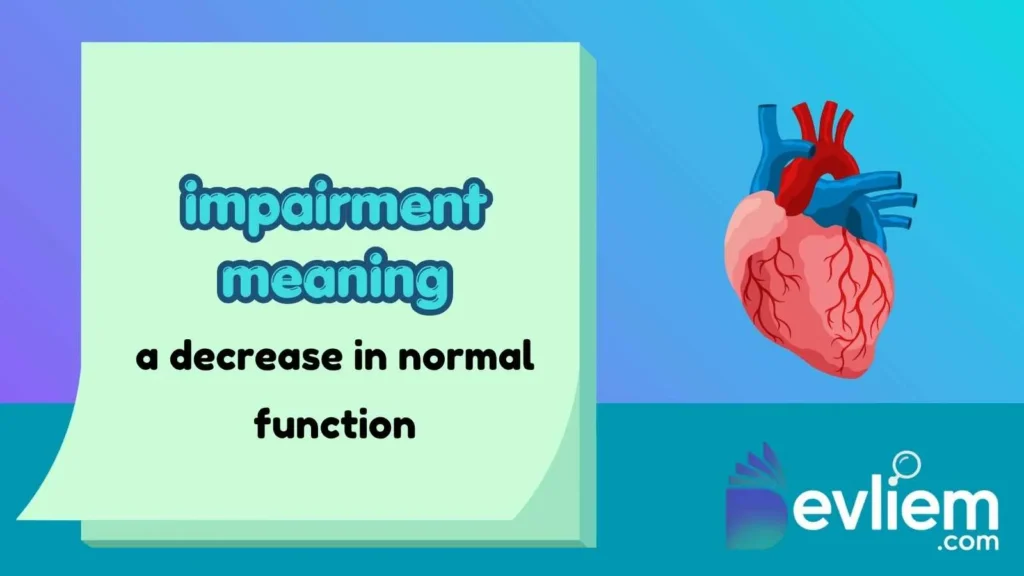
Impairment means a decrease in normal function—whether physical, mental, or sensory—that affects how someone performs everyday activities.
Origin of the Term
The word “impairment” comes from the Old French “empirer”, meaning “to make worse”. It entered English in the late Middle Ages and originally referred to damage or deterioration.
Over time, its usage expanded:
- Medical field: Focused on bodily or mental function loss
- Legal context: Linked to reduced ability (e.g., impaired driving)
- Everyday language: Used broadly to describe limitations
Pronunciation
Im-pair-ment (im-PAIR-ment)
How to Use “Impairment” Correctly in Texts & Chat
Unlike slang, “impairment” is a formal word, but it still appears in everyday conversations—especially when discussing health, safety, or abilities.
Tone & Context
- Formal: Medical reports, academic writing, legal discussions
- Semi-formal: Workplace or educational settings
- Casual: Used occasionally in serious conversations
Platform-Specific Usage
- SMS / WhatsApp:
“He has a visual impairment, so apps need to be accessible.” - Instagram / TikTok captions:
“Raising awareness about hearing impairment 💙.” - Twitter/X:
“Driving with impairment puts lives at risk.” - Reddit / Discord:
Often used in discussions about health, gaming accessibility, or disabilities
When NOT to Use It
- Avoid in light or humorous contexts—it can sound insensitive
- Don’t use it as a synonym for “problem” casually (e.g., “My phone has an impairment”). ❌)
Formatting Tips
- Usually lowercase unless starting a sentence
- Often paired with specific types:
- visual impairment
- cognitive impairment
- physical impairment
Real Conversation Examples Using “Impairment”
1. Between Friends
A: “Why does he use voice commands so much?”
B: “He has a vision impairment.”
👉 Meaning: Explains a physical limitation respectfully.
2. In a Workplace Chat
Manager: “We need to ensure the website supports users with visual impairment.”
👉 Meaning: Focuses on accessibility and inclusion.
3. In a Medical Context
Doctor: “The injury caused temporary motor impairment.”
👉 Meaning: Refers to reduced physical function.
4. In a Legal Situation
Officer: “Driving under impairment is a serious offence.”
👉 Meaning: Indicates reduced ability due to substances or conditions.
5. In a Family Discussion
Parent: “Grandpa’s memory impairment is getting worse.”
👉 Meaning: Refers to cognitive decline with emotional sensitivity.
Common Mistakes & Misunderstandings
1. Confusing Impairment with Disability
- Impairment: The condition (e.g., hearing loss)
- Disability: The impact on daily life (e.g., difficulty communicating)
👉 Not all impairments lead to disabilities.
2. Using It Too Casually
Saying “I have an impairment” for minor issues (like being tired) sounds exaggerated and inaccurate.
3. Generational Misunderstandings
- Older generations: May use it strictly medically
- Gen Z: More aware of nuanced meanings and inclusive language
4. Cultural Differences
In some regions, “impairment” may sound clinical or overly formal. People might prefer softer terms like “condition” or “challenge”.
“Impairment” Across Different Platforms & Demographics
Generational Usage
- Gen Z: Uses it in awareness conversations (mental health, accessibility)
- Millennials: Common in workplace and social discussions
- Older generations: Mostly in medical/legal contexts
Where It Appears Most
- Accessibility discussions on social media
- Educational content
- Health-related forums
Formality Level
- Considered formal to semi-formal
- Safe for professional use
- Not slang or casual shorthand
Trending Relevance (2026)
With increasing focus on:
- inclusive design
- mental health awareness
- accessibility laws
…the term “impairment” is more relevant than ever.
Related Slang, Abbreviations & Alternatives
Here are terms often confused with or related to impairment:
- Disability – A broader term describing participation limitations
- Condition – A neutral alternative
- Disorder – Often used medically
- Limitation – General restriction in ability
- alternative– Outdated in many contexts
- Injury – Physical harm causing impairment
- Cognitive decline – Specific to mental impairment
- Visual impairment – Reduced eyesight
- Hearing impairment – Reduced hearing ability
- Functional limitation – Technical synonym
👉 Example internal anchor: Learn more about disability vs impairment
FAQs:
What is the meaning of impairment in simple terms?
Impairment means a reduced ability to function normally, whether physically, mentally, or emotionally. It affects how a person performs daily tasks but doesn’t always define their overall capabilities.
Is impairment always permanent?
No. Impairments can be temporary, like recovering from surgery, or permanent, such as lifelong conditions like blindness or hearing loss.
What’s the difference between impairment and disability?
Impairment refers to the actual condition or limitation, while disability describes how that limitation affects participation in daily life or society.
Can mental health be considered an impairment?
Yes. Conditions like depression or anxiety can cause cognitive or emotional impairments that affect concentration, memory, or decision-making.
How is impairment used in law?
In legal contexts, impairment often refers to reduced ability—especially in cases like impaired driving, where substances affect judgement and coordination.
Conclusion:
Understanding the impairment meaning goes beyond memorising a definition; it’s about recognising how conditions affect real people in real situations.
It’s a term rooted in medicine, used in law, and increasingly important in everyday conversations about inclusion and accessibility.
Whether you’re reading a report, having a discussion, or creating content, using it correctly shows awareness and respect.
The next time you see or hear impairment, you’ll know exactly what it means and why it matters.
👉 Got another term you’re curious about? Drop it below and keep expanding your digital vocabulary.

Hi, I’m Emily Taylor, the voice behind Devliem.com, where meanings aren’t just explained, they’re made easy to understand.
I’ve always been fascinated by words, the way they change, evolve, and sometimes confuse us more than they should. That curiosity turned into a mission: to break down complex meanings, trending slang, and everyday expressions into something clear, simple, and actually useful.